
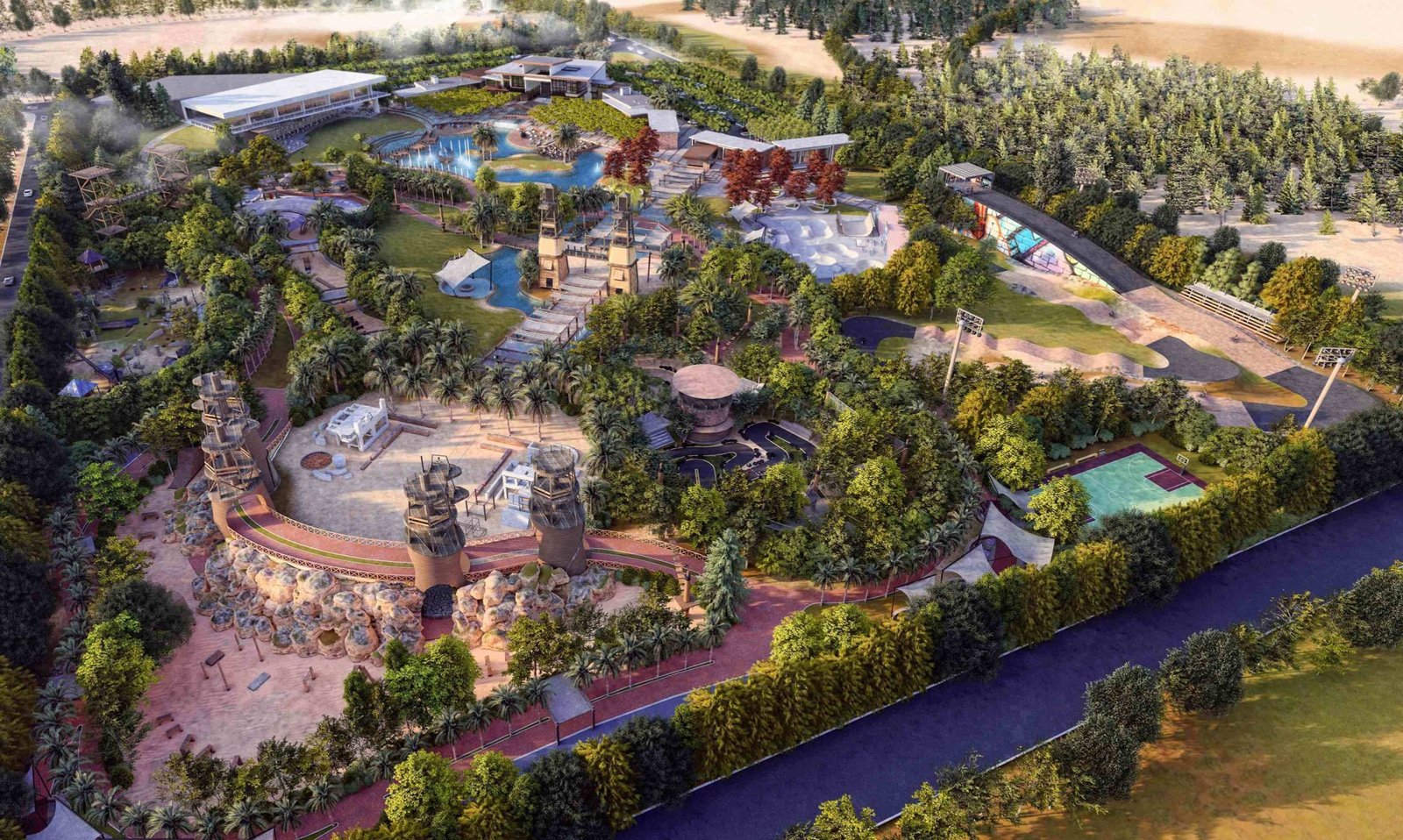
The future of landscape design is no longer shaped by aesthetics alone. Environmental performance, human health, and technology are converging to fundamentally change what landscape architecture does, how it is practiced, and what clients and communities expect from it.
The future of landscape design is being driven by three powerful forces: the growing demand for sustainable and climate-responsive green infrastructure, a substantial body of peer-reviewed research connecting green spaces to measurable health outcomes, and the emergence of artificial intelligence and virtual reality as practical tools in the design process.
Each of these forces is already reshaping how landscape architects work. Together, they are redefining what the discipline is for and what it can achieve for the communities it serves.
Sustainability in Landscape Design: From Decoration to Essential Infrastructure
The future of landscape design demands that outdoor spaces perform ecologically — not just visually. The environmental pressures facing cities today — climate change, urban heat, water scarcity, biodiversity loss — cannot be addressed by architecture and engineering alone. They require landscape solutions embedded into the structure of the built environment from the earliest stages of master planning.
Green Infrastructure
Understanding the future of landscape design begins with green infrastructure. Living walls, green roofs, bioswales, urban forests, and connected green corridors are no longer aesthetic additions to urban projects. They are documented tools for urban climate adaptation. A 2024 systematic review published in Springer’s Sustainability Science confirmed that urban green infrastructure delivers measurable benefits across heat mitigation, air quality improvement, stormwater management, and biodiversity support — and that these benefits are strongest when green infrastructure is planned as an integrated network rather than as isolated elements.
Green roofs reduce building energy consumption by acting as thermal insulators and reducing the urban heat island effect. UNEP identifies nature-based solutions, including green roofs and living walls, as essential components of urban climate adaptation strategies — particularly in cities facing extreme heat and water stress.
Smart Irrigation Systems
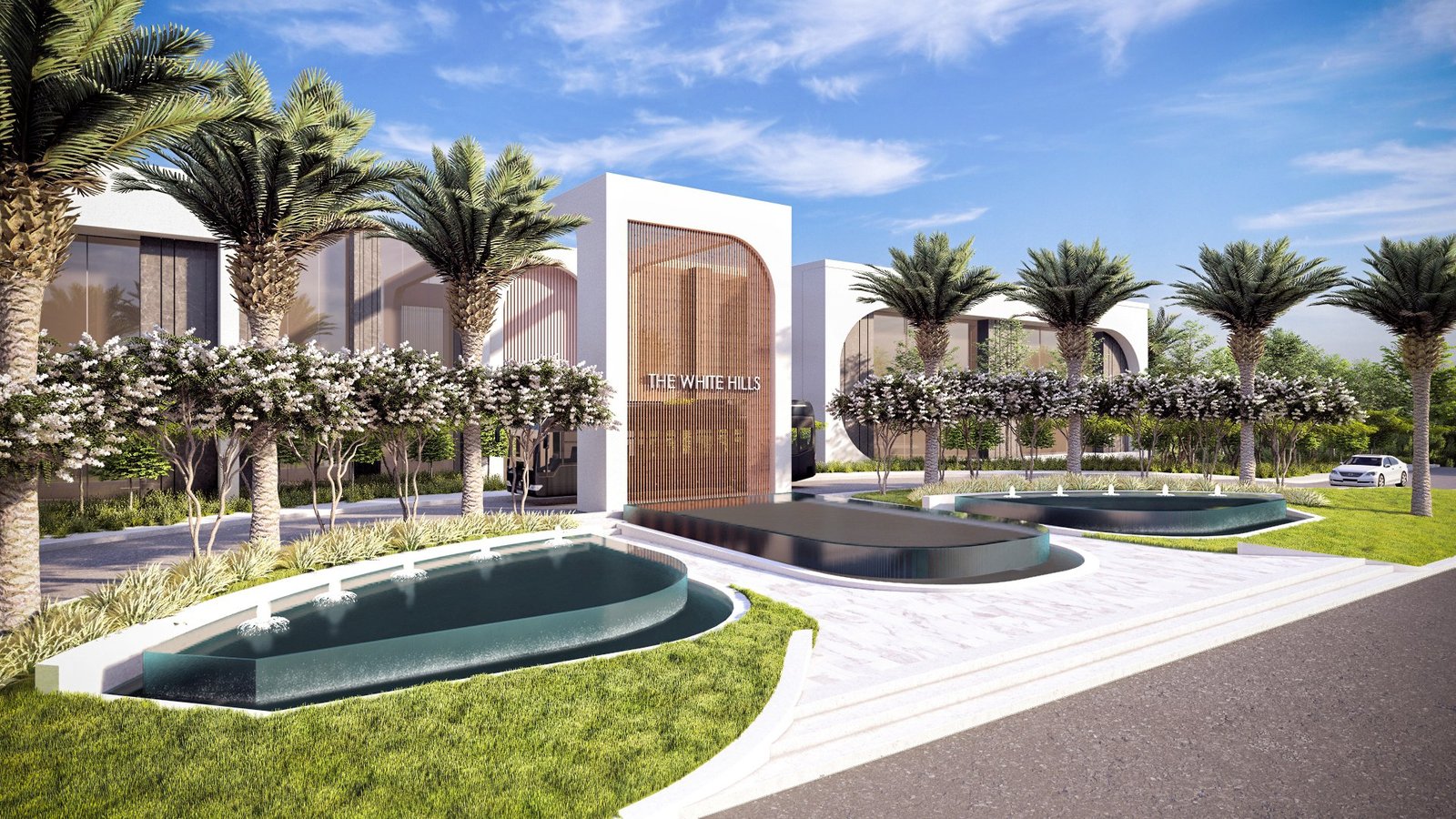
Water-efficient irrigation is one of the most impactful sustainability tools in the future of landscape design practice today. Smart irrigation systems use real-time sensor data, weather information, and soil moisture monitoring to calibrate water delivery precisely to plant requirements — eliminating over-irrigation and reducing waste without compromising plant health.
The US Department of Energy confirms that controlled research studies show up to 50% average water savings from smart irrigation controllers compared to conventional timer-based systems. A documented case study from Santa Rosa, California, found that implementing a smart irrigation management system across 10 sites reduced water consumption by 38% in the first year of operation. The US EPA’s WaterSense program estimates that smart irrigation controllers can save the average home approximately 7,600 gallons of water annually.
For landscape architects designing in arid climates — across the Middle East, North Africa, and the Gulf — smart irrigation is not an optional upgrade. It is a baseline requirement of responsible urban design and landscape practice.
Native and Sustainable Planting
Native planting is central to the future of landscape design in arid and semi-arid environments. Native plant species adapted to local climate conditions require significantly less irrigation, less maintenance, and fewer inputs than introduced species, while providing greater ecological value by supporting local biodiversity. ASLA’s Climate and Biodiversity Action Plan places the use of climate-adapted and native planting at the centre of the profession’s sustainability commitments, identifying it as a fundamental strategy for reducing landscape carbon footprints and supporting ecological resilience.
The future of landscape design is not about making outdoor spaces look sustainable. It is about designing landscapes that perform sustainably — ecologically, climatically, and over time.
Green Spaces and Mental Health: What the Research Confirms About the Future of Landscape Design
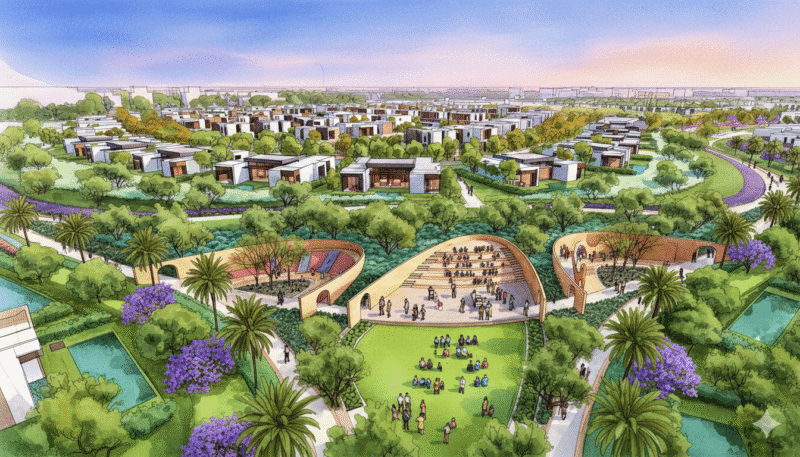
The future of landscape design must be built on a rigorous understanding of what green spaces do to the people who use them. The evidence base connecting green space exposure to measurable mental and physical health outcomes has grown substantially in recent years — and it carries direct implications for how landscapes are designed, positioned, and prioritized in urban developments.
The Evidence Base
A 2023 meta-analysis published in Environmental Research (Liu et al., Tianjin University) analyzed the relationship between green space exposure and depression and anxiety outcomes across multiple studies. The analysis confirmed that higher green space exposure is associated with meaningful reductions in both depression and anxiety — supporting green space integration as a public health intervention, not merely an amenity.
A 2024 meta-analysis published in One Health (ScienceDirect) analyzing 59 studies across more than 20,000 cases found that green space exposure is associated with an 11% reduction in the overall risk of common psychiatric disorders, with a measurable positive effect on depression outcomes across both cross-sectional and cohort study designs.
A 2023 umbrella review from the National Institute for Health and Care Research (NIHR) examining longitudinal population-wide data confirmed that changes in green and blue space exposure produce corresponding changes in individual-level wellbeing and mental health — establishing a causal relationship, not simply a correlation.
The 3-30-300 green space rule, developed by urban greening researchers and increasingly referenced in urban planning policy, proposes that every resident should be able to see at least three trees from their home, live in a neighborhood with at least 30% tree canopy cover, and be within 300 meters of the nearest park or green space. These thresholds are now being incorporated into green space planning standards in several European cities. For practitioners shaping the future of landscape design, the 3-30-300 rule provides a measurable, evidence-based framework for setting green space targets during the masterplanning stage — long before individual planting decisions are made.
What This Means for the Future of Landscape Design Practice
For landscape architects, the mental health evidence base carries a direct design implication: the placement, accessibility, and quality of green spaces within a development is not a secondary consideration. It is a determinant of health outcomes for the people who live and work there.
This means green spaces must be positioned where people actually access them — not where buildings chose not to go. It means walking trails, shaded seating, water features, and natural planting are not amenities but health infrastructure. The future of landscape design is inseparable from the future of public health in urban environments.
What the Research Confirms About Green Spaces and Health
- Green space exposure is associated with measurable reductions in depression and anxiety risk across multiple peer-reviewed meta-analyses
- Longitudinal population studies confirm that increases in green space access produce corresponding improvements in individual wellbeing
- Physical activity and social interaction — both supported by well-designed green spaces — are independently associated with improved mental health outcomes
- The 3-30-300 rule provides a practical threshold for green space planning that is grounded in research evidence
- The strongest health outcomes are associated with accessible, well-designed green spaces — not with isolated or poorly positioned green areas
AI and VR: How Technology Is Transforming the Future of Landscape Design
The future of landscape design is also being shaped by technology — not as a replacement for design intelligence, but as a powerful tool that extends what landscape architects can do, how quickly they can do it, and how effectively they can communicate design intent to clients and stakeholders.
Artificial Intelligence in Landscape Architecture
A 2024 doctoral study at Utah State University (Fernberg, 2024), which surveyed landscape architects on their attitudes toward AI, found a broad recognition that AI is becoming a significant tool across the profession — with applications spanning site analysis, design generation, performance simulation, and client engagement. The study found enthusiasm for AI’s analytical capabilities alongside considered caution about its implications for creativity and the design process.
A 2024 paper published in the Journal of Landscape Research (Qiu, 2024) identified the primary areas where AI technology is already being applied in landscape architecture: improving work efficiency, optimizing design development, strengthening construction management, and enabling more intelligent landscape maintenance. The paper concludes that AI applications in the field will become more extensive as the technology develops — with particular potential in predictive modelling of plant growth, site performance simulation, and the analysis of complex environmental datasets. This data-driven dimension of the future of landscape design allows practices to move from intuition-led to evidence-led design decisions at every stage of a project.
Practically, AI tools are already being used to analyze site conditions — processing soil composition, sun exposure, wind patterns, and hydrological data — at a speed and scale that would not be possible manually. This allows designers to make more informed, site-specific decisions earlier in the process, reducing the risk of costly design revisions and improving the ecological performance of the final outcome. The future of landscape design, in this sense, is more data-informed and more precisely calibrated to the conditions of each specific site.
Virtual Reality and Immersive Design Communication
Virtual reality represents one of the most significant technological shifts in the future of landscape design. It is transforming how landscape architects communicate design intent — and how clients make decisions. By allowing stakeholders to experience a proposed landscape at human scale before a single plant is placed, VR fundamentally changes the nature of the design review process.
A 2024 study published in the Journal of Gerontology (Lu, Chui & Li, University of Hong Kong) demonstrated that immersive VR simulations of urban green spaces produced significant reductions in stress, anxiety, and negative emotions among participants — confirming that even virtual exposure to landscape environments carries measurable psychological benefit. This finding has implications not only for therapeutic applications but for the use of VR as a tool to communicate the experiential value of proposed landscapes to clients and planning authorities.
For landscape architects, VR enables real-time testing of spatial arrangements, visual impact, seasonal variation, and sensory experience — before design decisions become construction commitments. It reduces misalignment between client expectation and design output, and it makes the case for landscape investment more compellingly than any static presentation could.
Conclusion: The Future of Landscape Design Starts Now
The future of landscape design is the convergence of sustainability as performance, green space as health infrastructure, and technology as a design tool — each reinforcing the others and together elevating what landscape architecture can contribute to the built environment.
The future of landscape design is already being built — in sustainable landscapes that reduce urban heat, manage water, and support biodiversity. Green spaces, properly designed and positioned, deliver measurable reductions in depression, anxiety, and chronic disease risk. AI extends the analytical capacity of the design process. VR deepens client understanding and commitment. None of these is a trend. Each is a documented, evidence-based shift in what the discipline does and what it is for.
The future of landscape design belongs to practitioners who understand that outdoor space is not a finishing layer on a development plan. It is the medium through which cities become livable, resilient, and genuinely good for the people who inhabit them.
Sources & Further Reading
- Liu, Z. et al. (2023). Green space exposure on depression and anxiety outcomes: A meta-analysis. Environmental Research, 231(3). PubMed
- Xie, Y. & Tan, X. (2024). Green spaces exposure and the risk of common psychiatric disorders: A meta-analysis. One Health. ScienceDirect
- Geary, R.S. et al. (2023). Green–blue space exposure changes and impact on individual-level well-being and mental health. NIHR. NCBI
- Springer Nature. (2024). Benefits and Co-Benefits of Urban Green Infrastructure for Sustainable Cities. Sustainability Science.
- Qiu, C. (2024). Application of Artificial Intelligence Technology in Landscape Architecture Industry. Journal of Landscape Research, 16(2).
- Fernberg, P.J. (2024). Artificial Intelligence in Landscape Architecture: A Survey of Theory, Culture, and Practice. Utah State University. Utah State University Digital Commons
- Lu, S., Chui, H., & Li, L. (2024). Assessing the Effects of VR Urban Greenness for Mental Health. Journal of Gerontology. NCBI
- US EPA WaterSense. Smart Irrigation Controllers. EPA.gov
- ASLA. (2024). Climate & Biodiversity Action Plan. ASLA.org
- UNEP. (2023). Nature-Based Solutions for Urban Climate Adaptation. UNEP.org