



The National Training Academy (NTA) in Egypt, inaugurated in 2017 under the auspices of President Abdelfattah El-Sisi, emerged from the aspirations of young Egyptian graduates of the Presidential Leadership Program (PLP). Conceived as a multidisciplinary and transformative incubator, the Academy was designed to nurture and empower future leaders from diverse cultural, educational, and social backgrounds. Its founding vision centered on bridging gaps in leadership development and fostering a dynamic environment for human capital growth aligned with the Sustainable Development Goals (SDGs). The first campus, located in Sheikh Zayed City on Cairo’s western outskirts, was established through the adaptive reuse and renovation of an existing administrative complex into a vibrant educational hub that encourages interaction, creativity, and experiential learning.
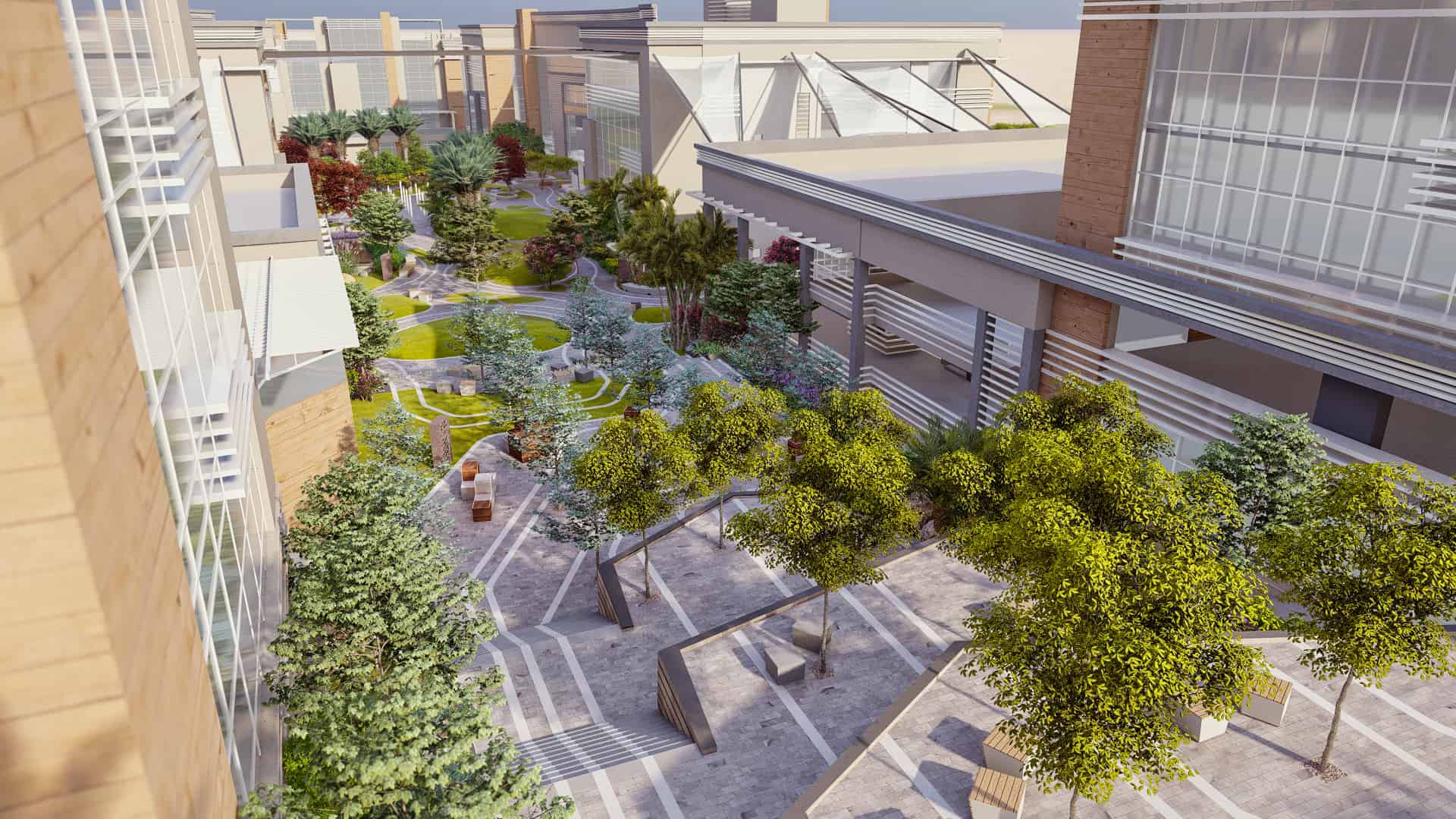
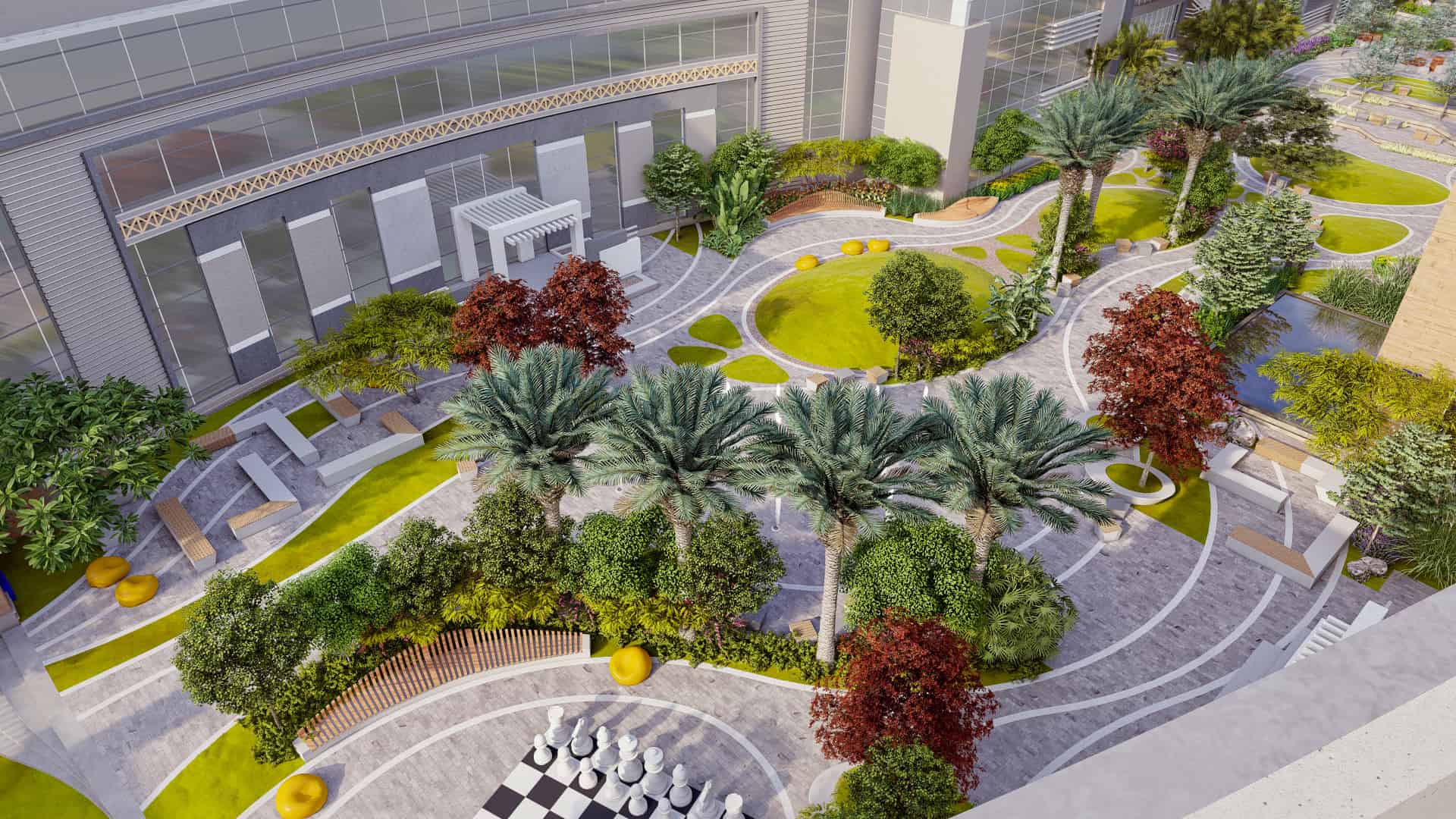
In 2019, Schaduf Landscape Architects, a Cairo-based multidisciplinary design and consulting firm, was appointed as master planner and landscape architect for the NTA campus. Working closely with the Academy’s young in-house project team and a consortium of specialized consultants, Schaduf was tasked with developing the design concept for the overall outdoor experience and sustainability strategy. The key challenge lay in transforming an existing eight-building administrative site—characterized by a 20-meter elevation change—into a unified, interactive learning environment. The design was conceived as a seamless integration of indoor and outdoor spaces, promoting continuous learning through movement, engagement, and reflection.
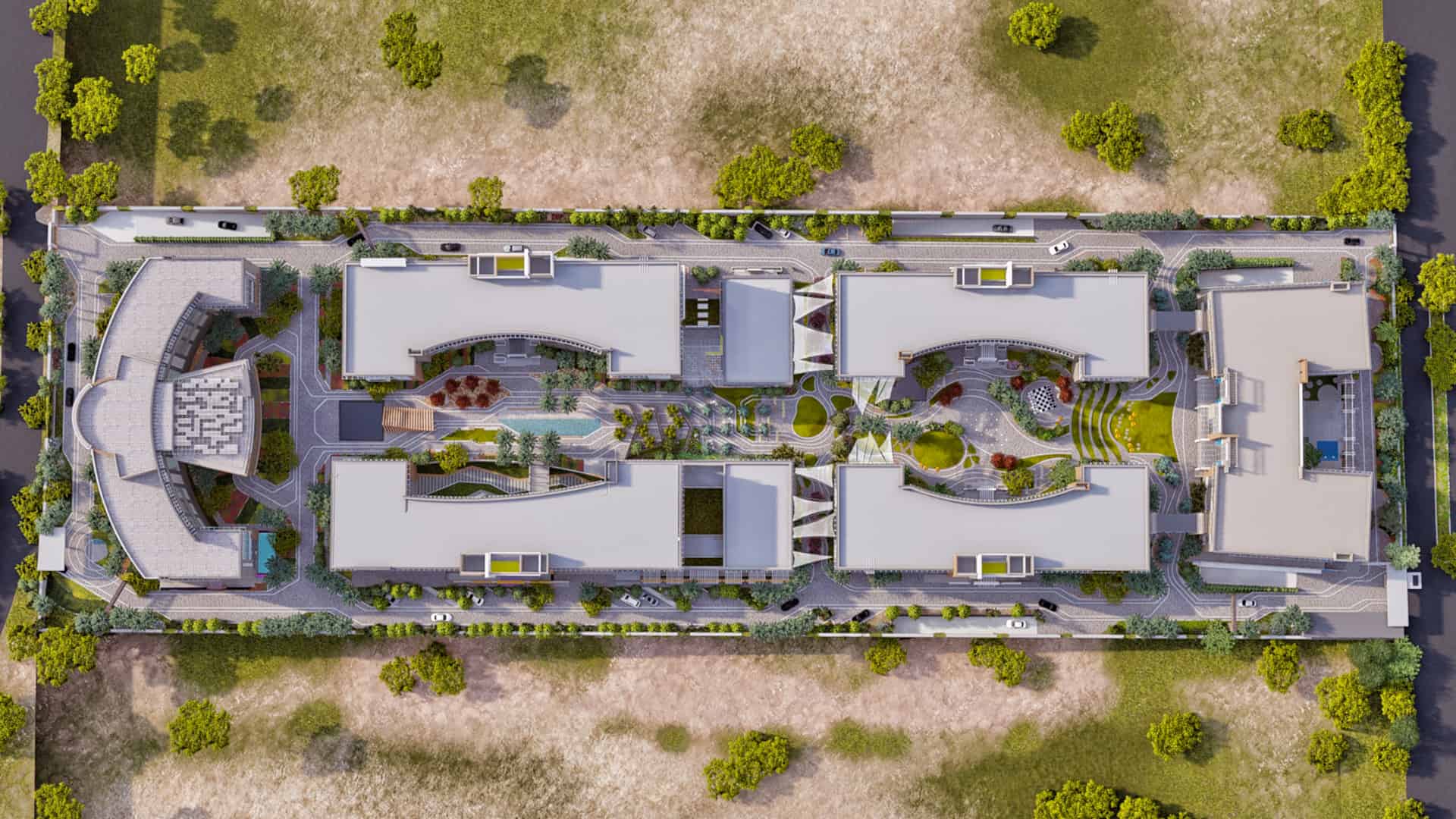
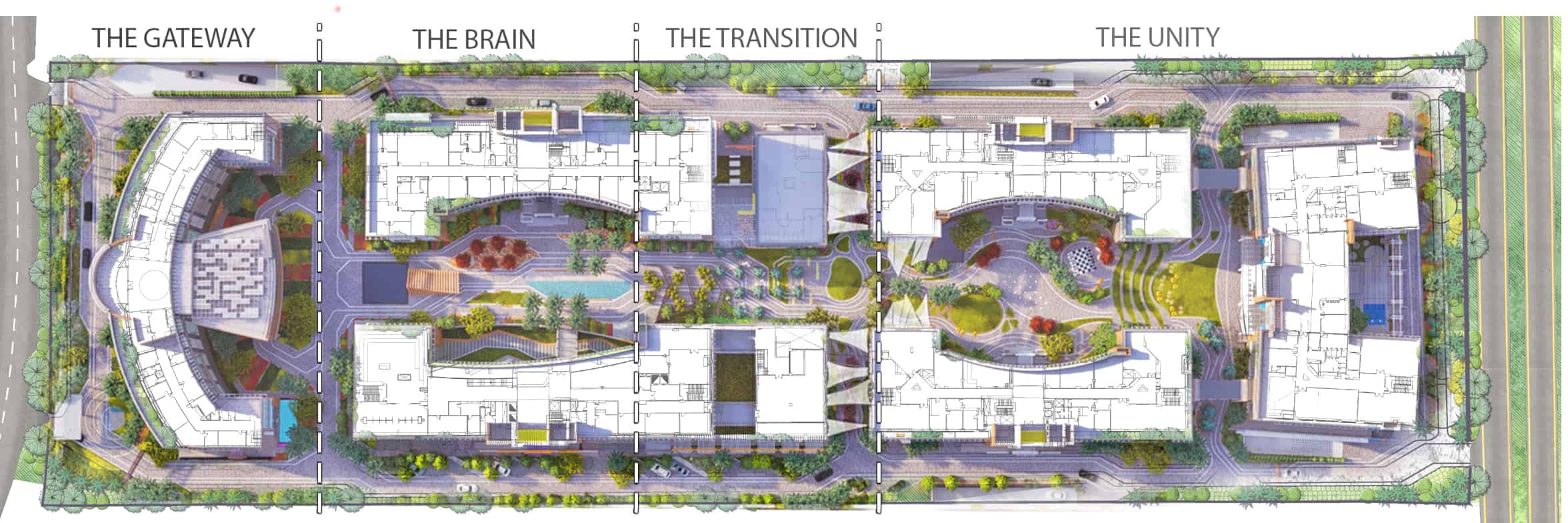
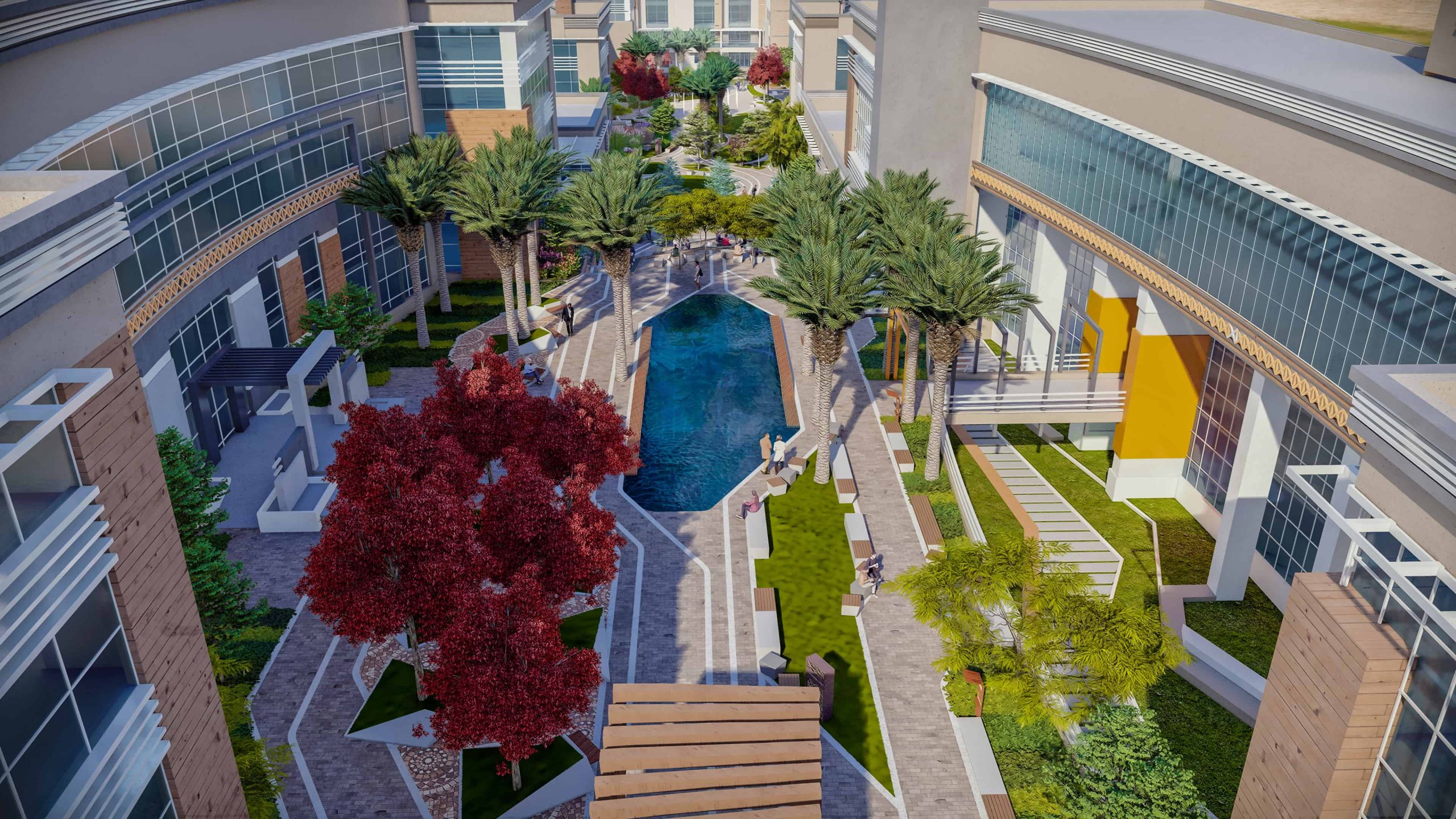
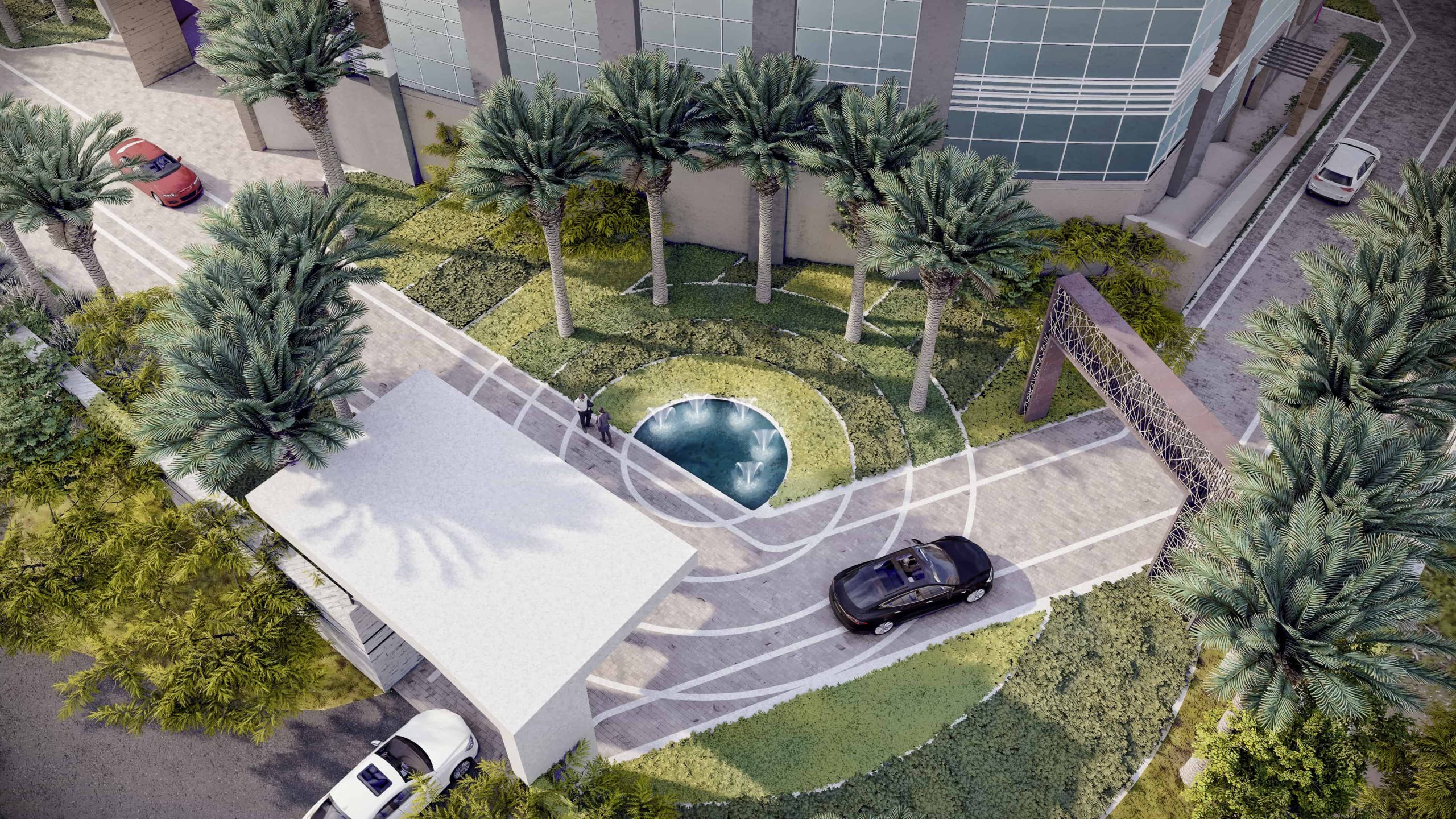
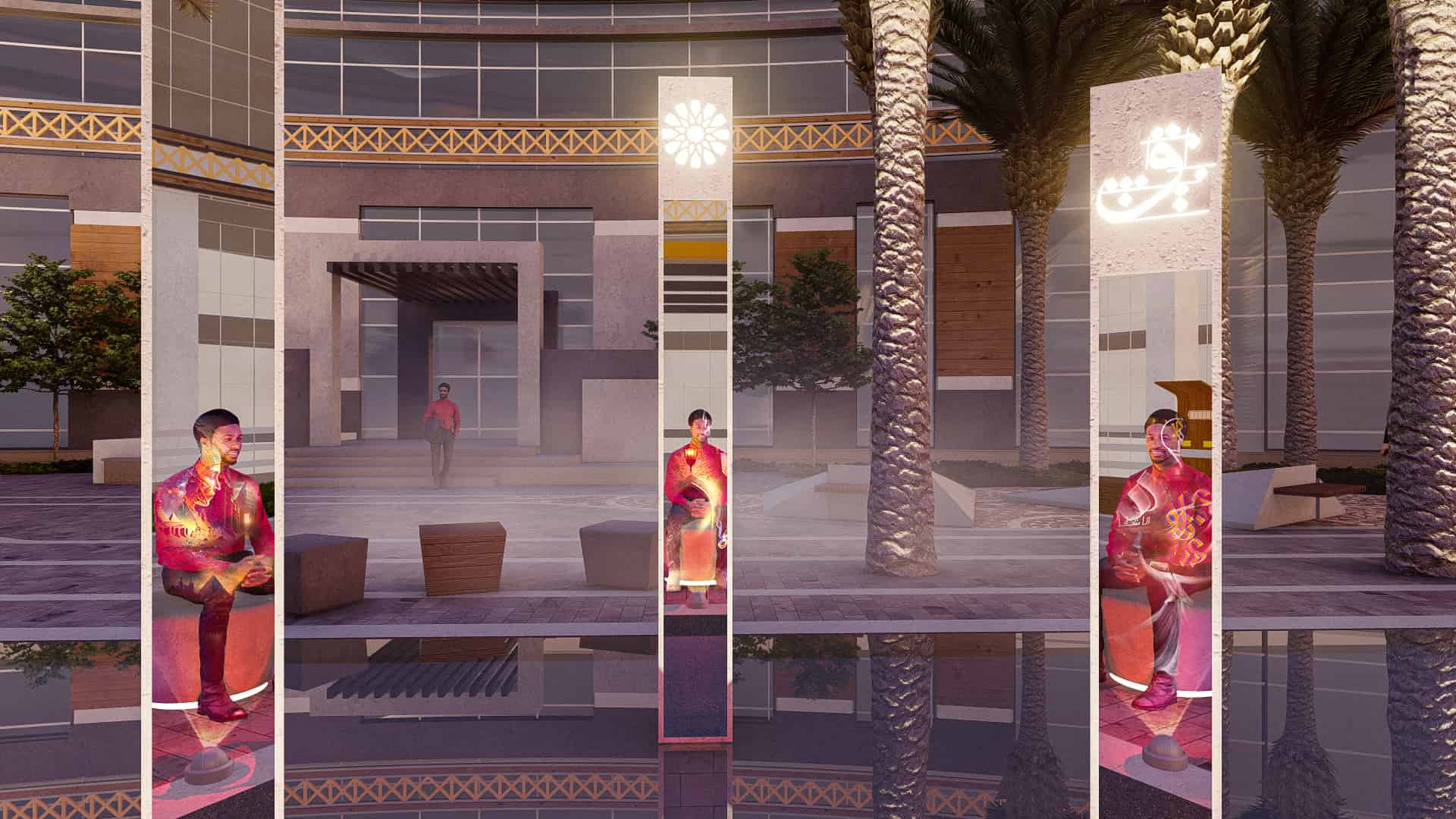
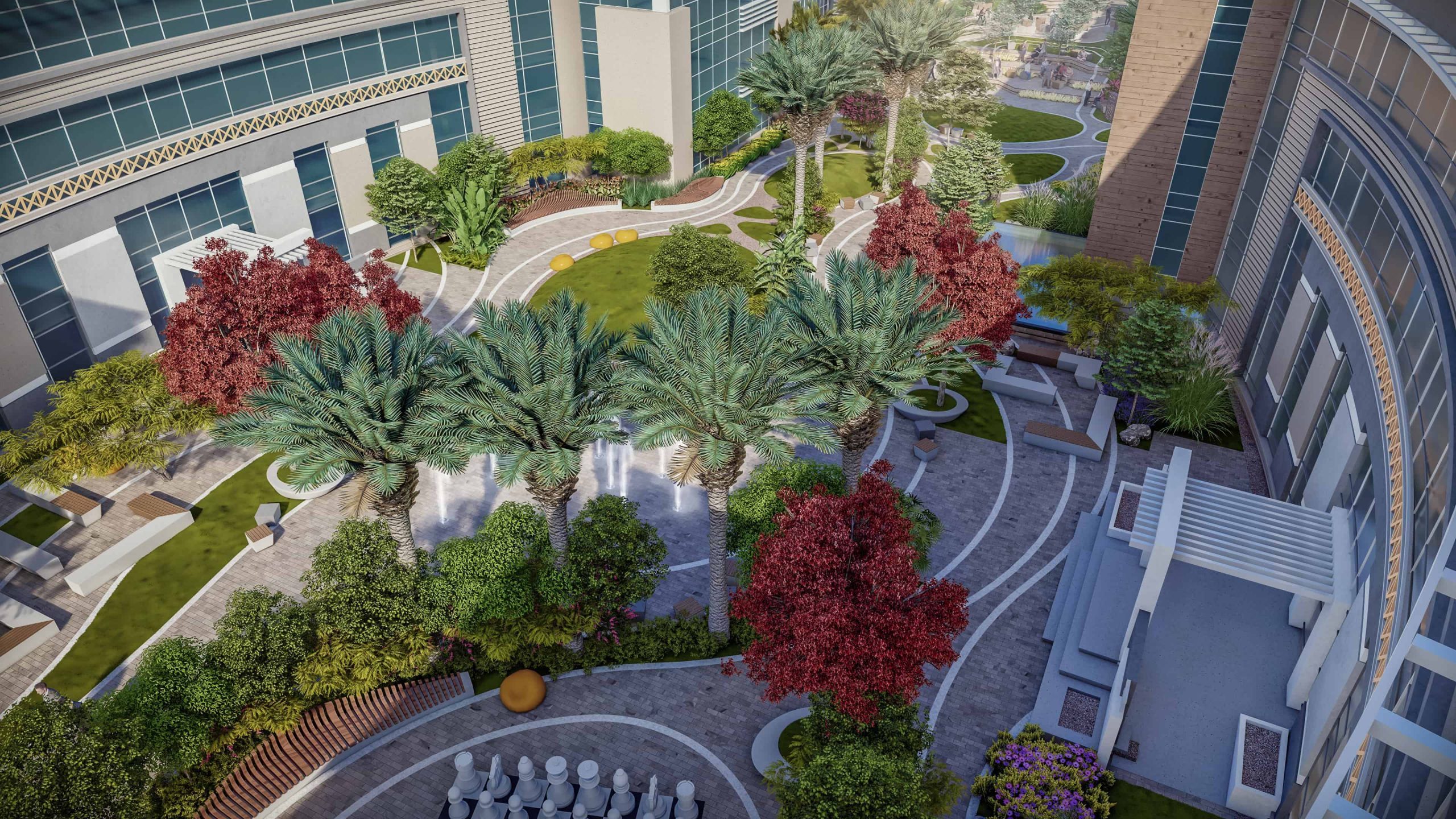
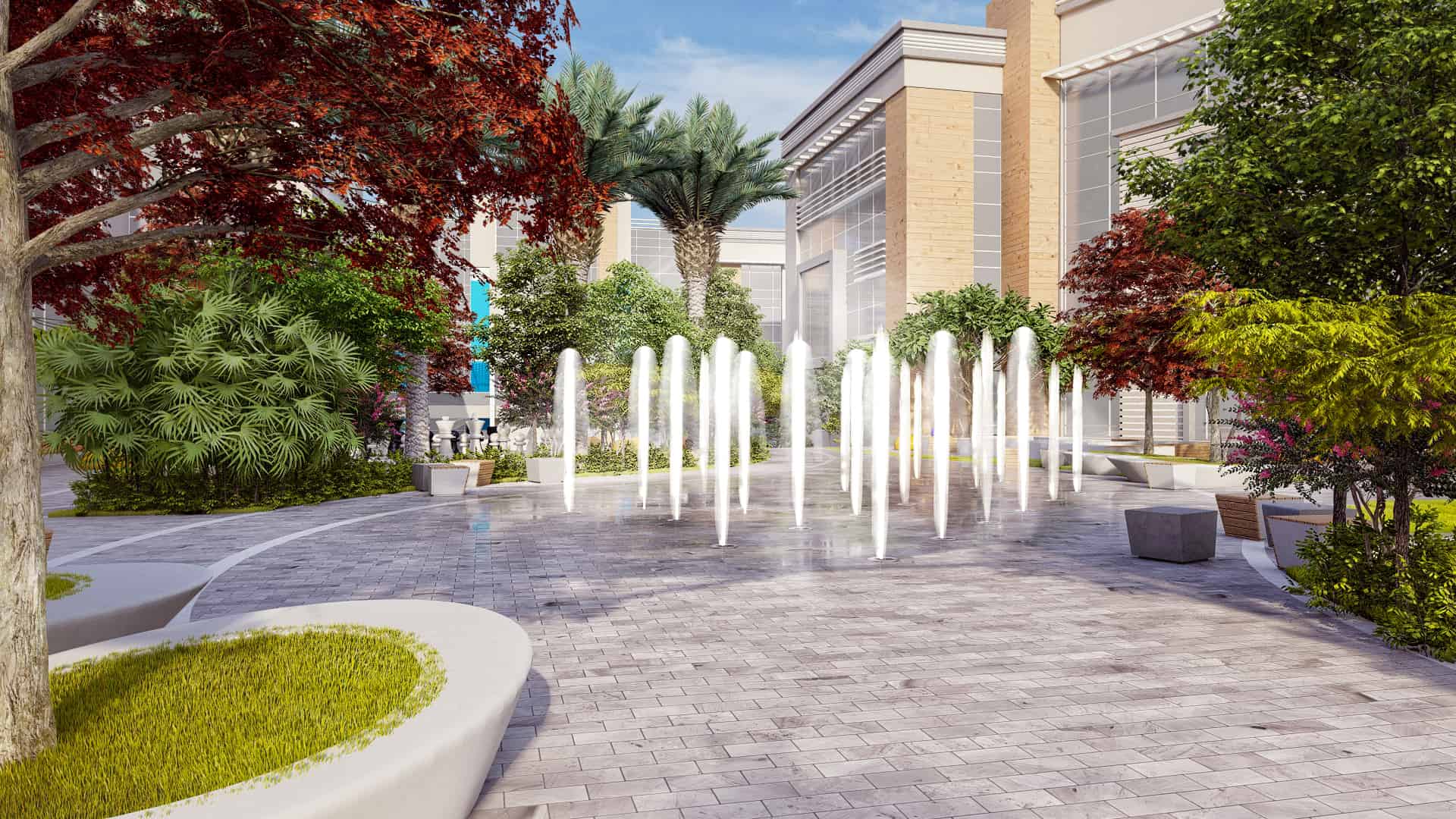
Schaduf’s concept was inspired by the NTA’s mission to develop well-rounded individuals who learn through interaction with both society and the environment. The landscape design translated this philosophy into a journey of transformation across the site’s natural topography. The campus is structured around four main experiential zones—“The Gateway,” “The Brain,” “The Transition,” and “The Unity”—each representing a stage in the learner’s developmental journey. The experience begins at The Gateway, the northernmost and highest point of the site, where users are welcomed by a tranquil fountain and a panoramic view over the campus. This entry zone serves as a formal arrival point that transitions from the outer city’s bustle into an atmosphere of calm reflection.
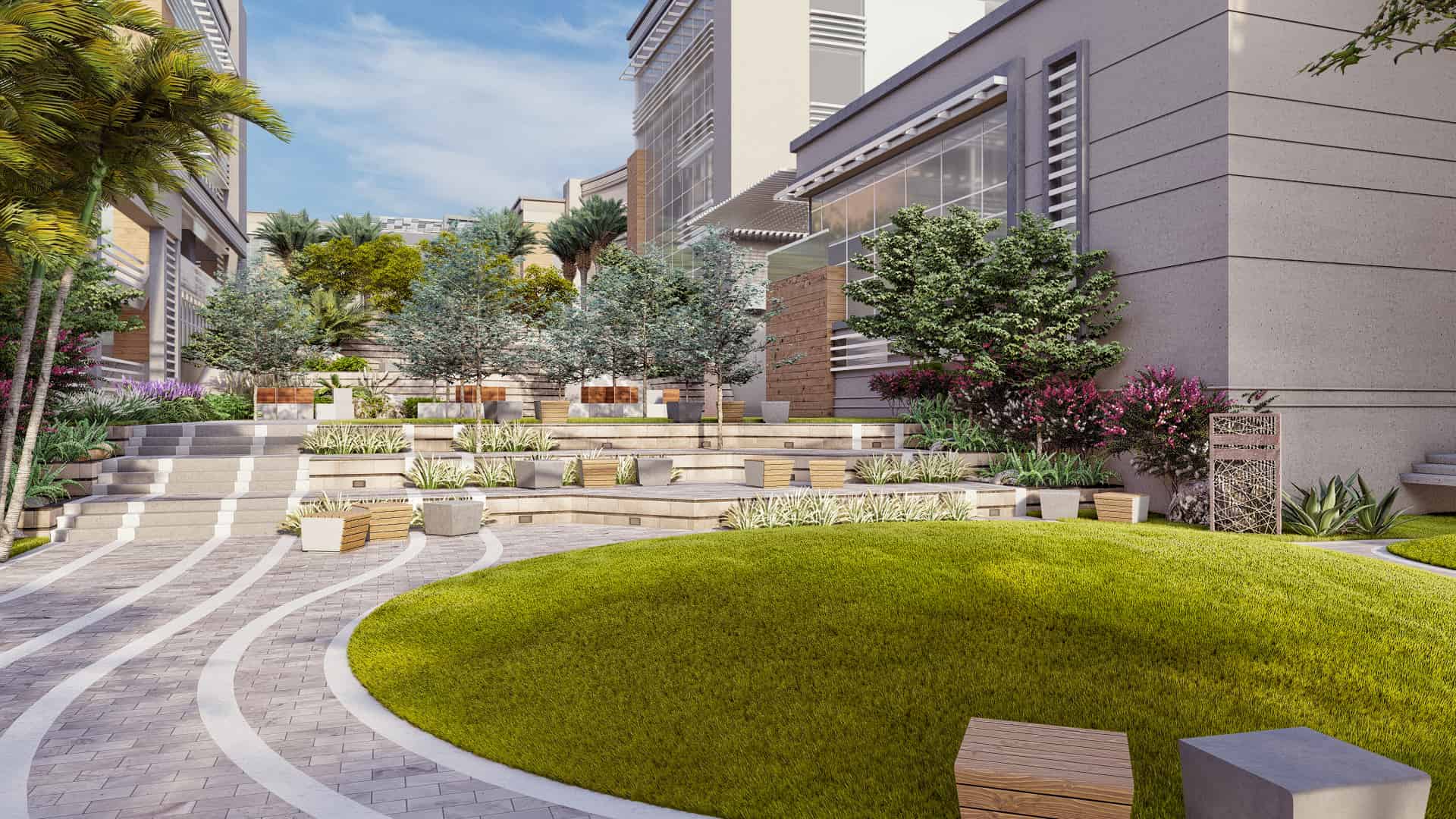
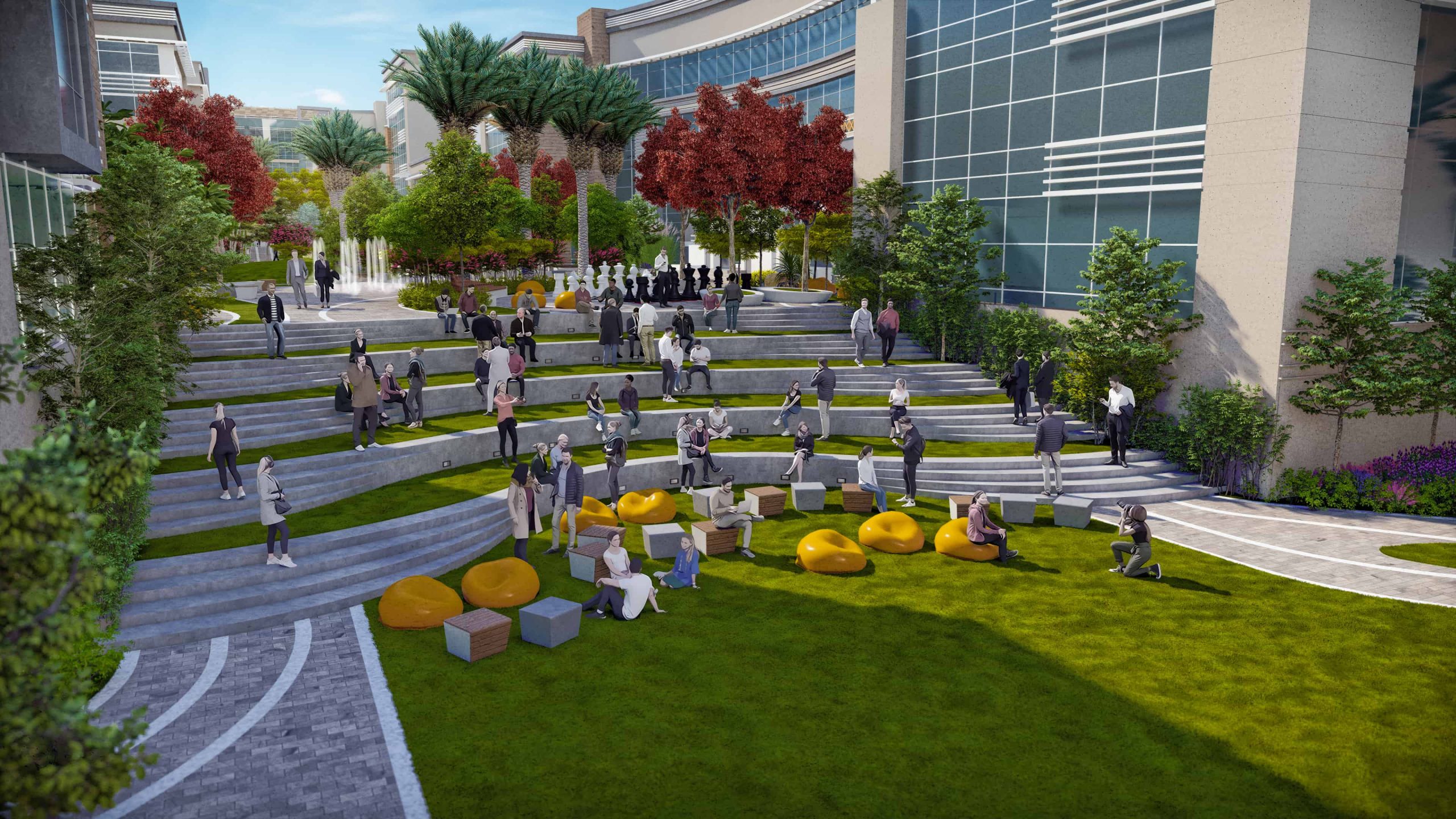
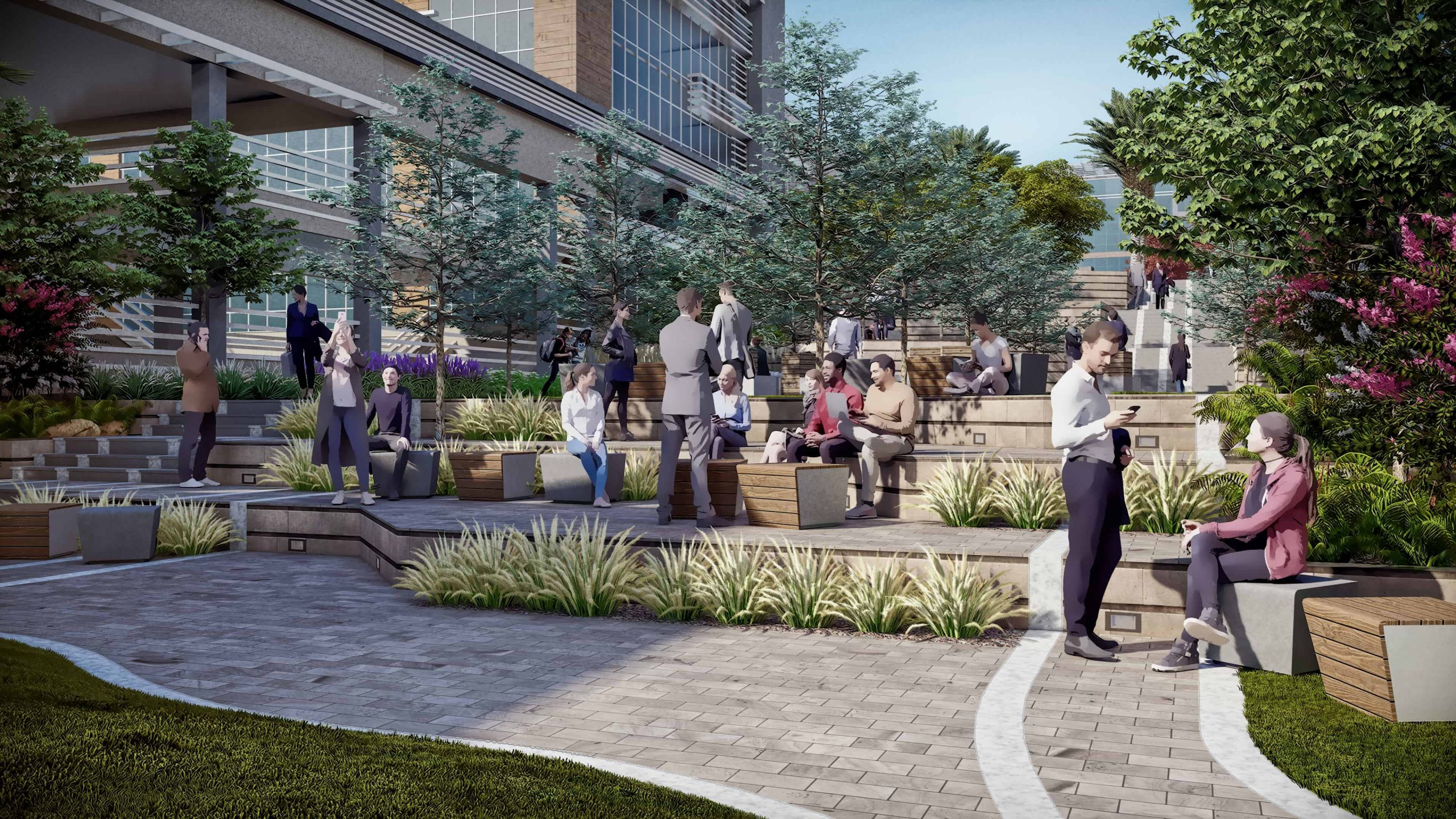
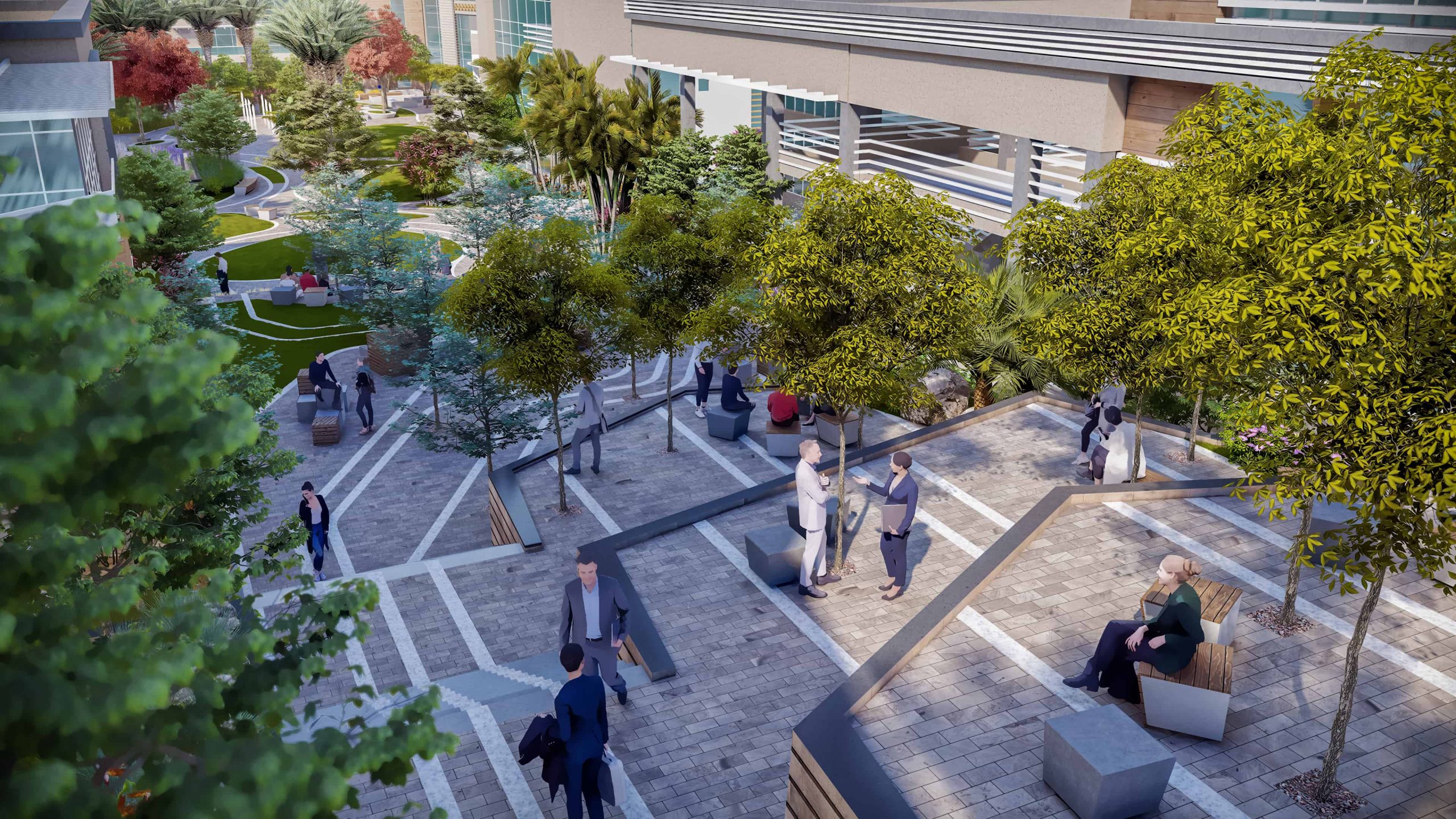
From there, visitors and students descend into The Transition zone, where an eight-meter slope was transformed through earthwork sculpting into cascading terraces and a compact outdoor amphitheater—the Podium—that can host 50 participants for lectures or presentations. These spaces accommodate flexible group activities, discussions, and creative sessions in settings designed to stimulate innovation and teamwork. Materials and design elements, such as the stone cladding of the Podium’s “wall of fame,” pay homage to NTA’s partners and contributors, symbolizing collaboration and institutional pride.
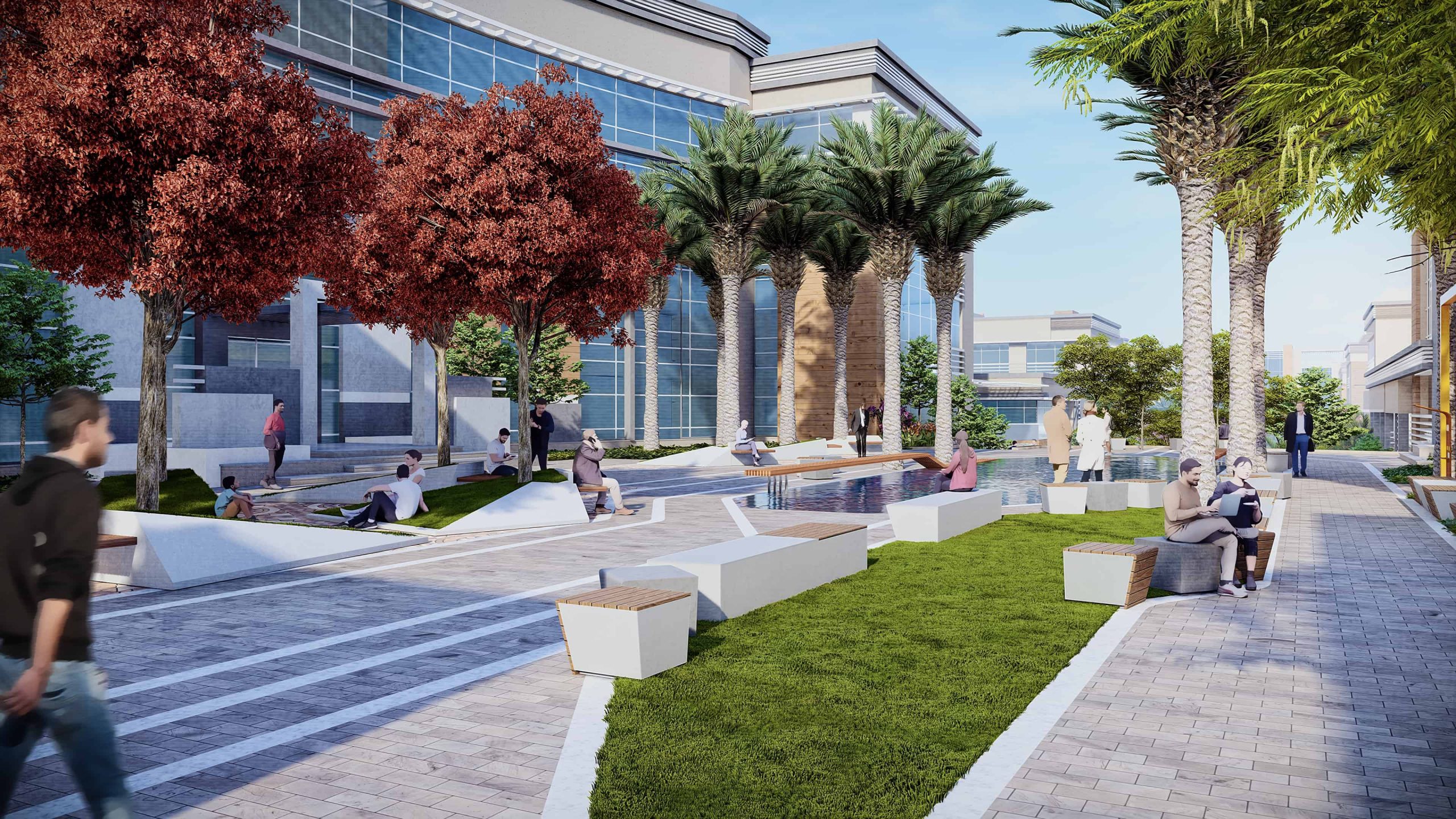
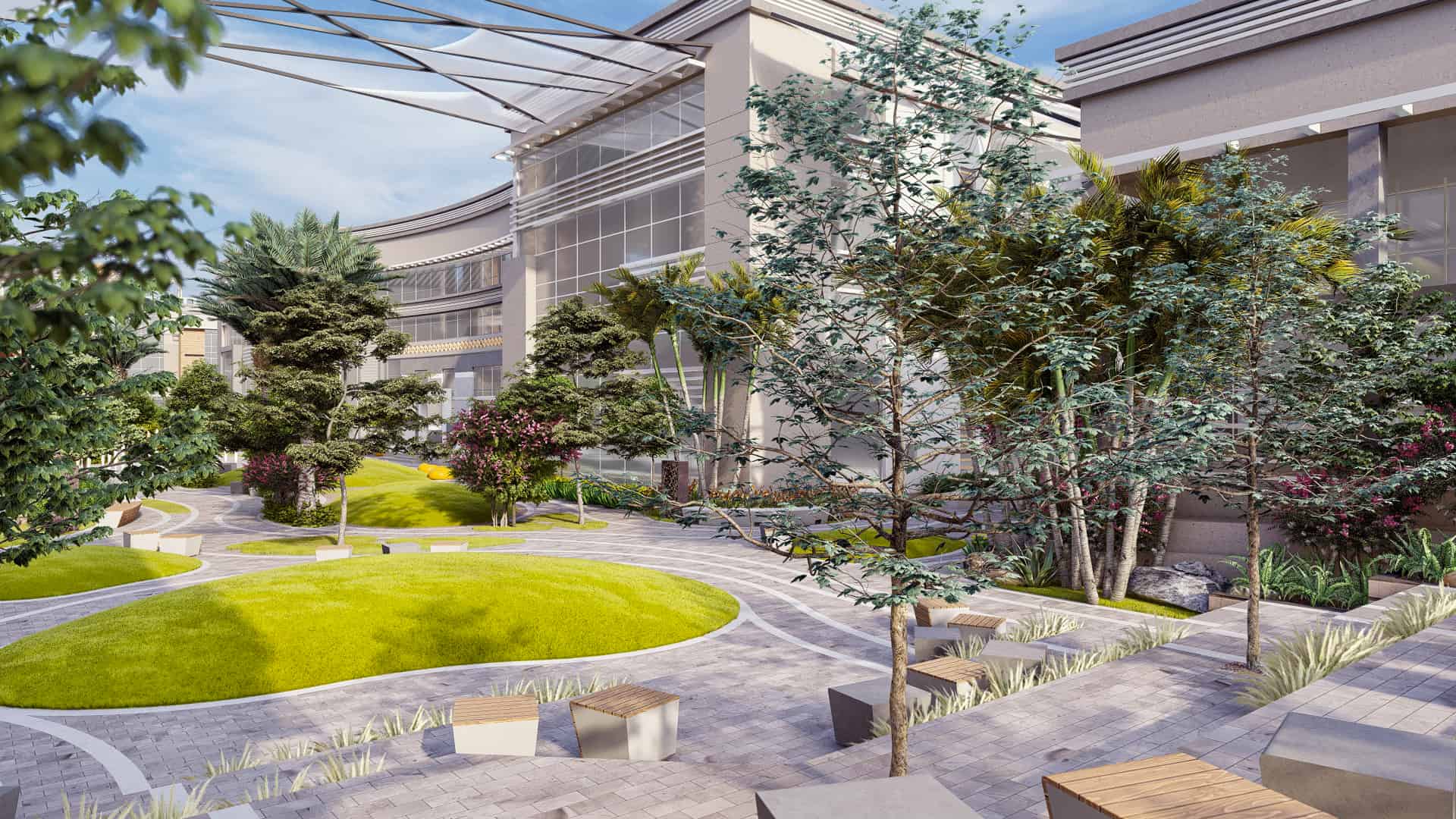
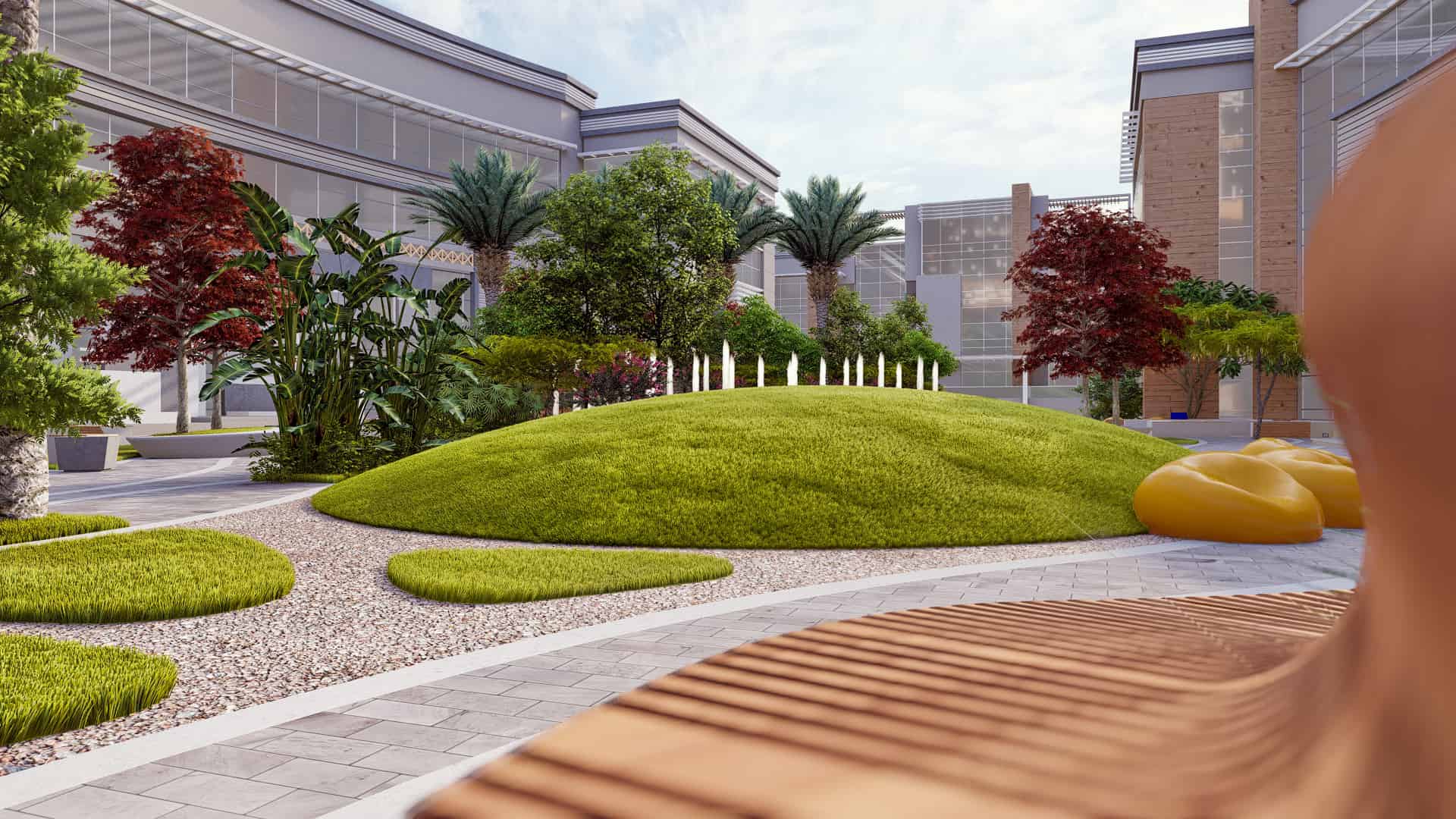
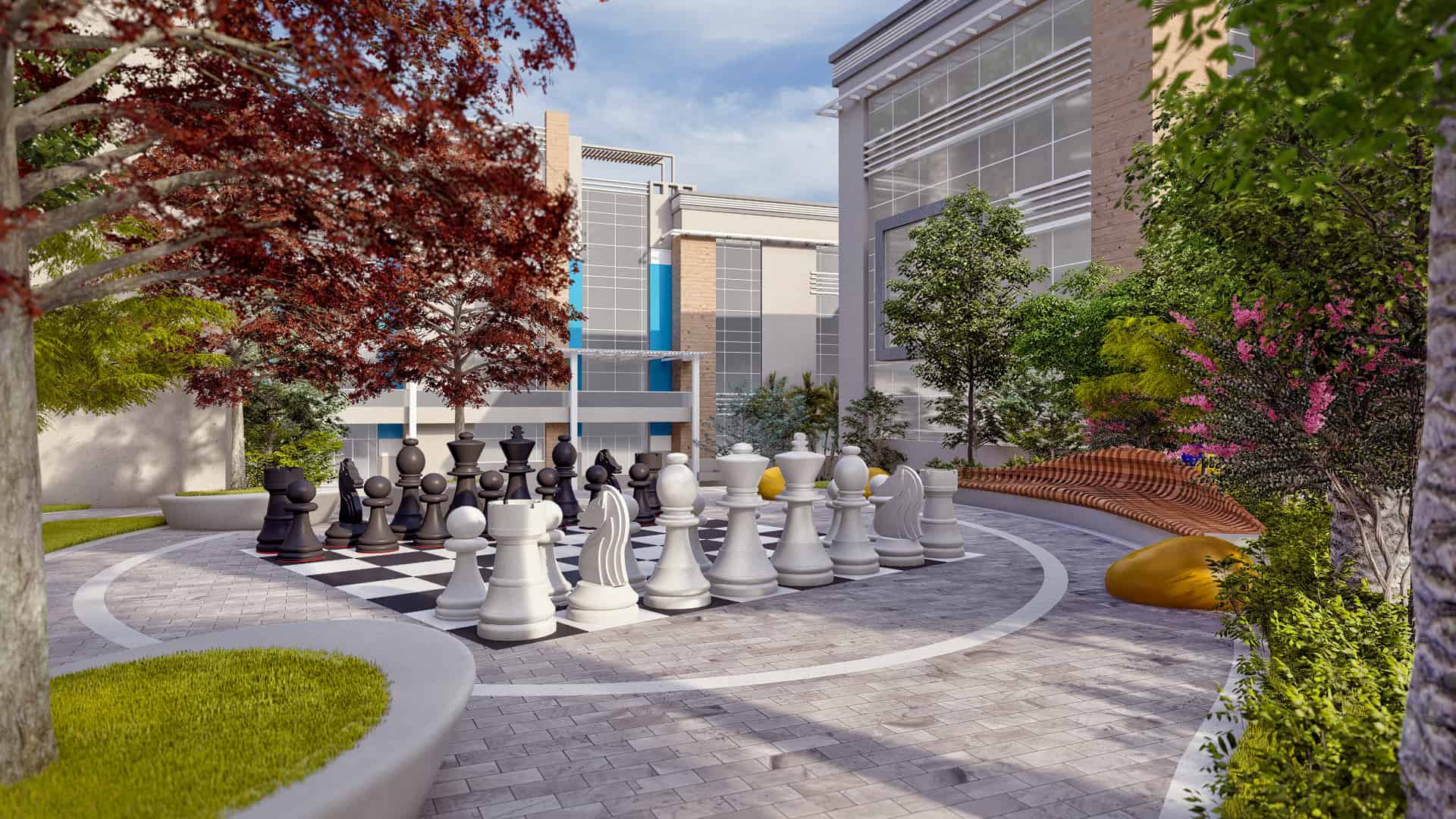
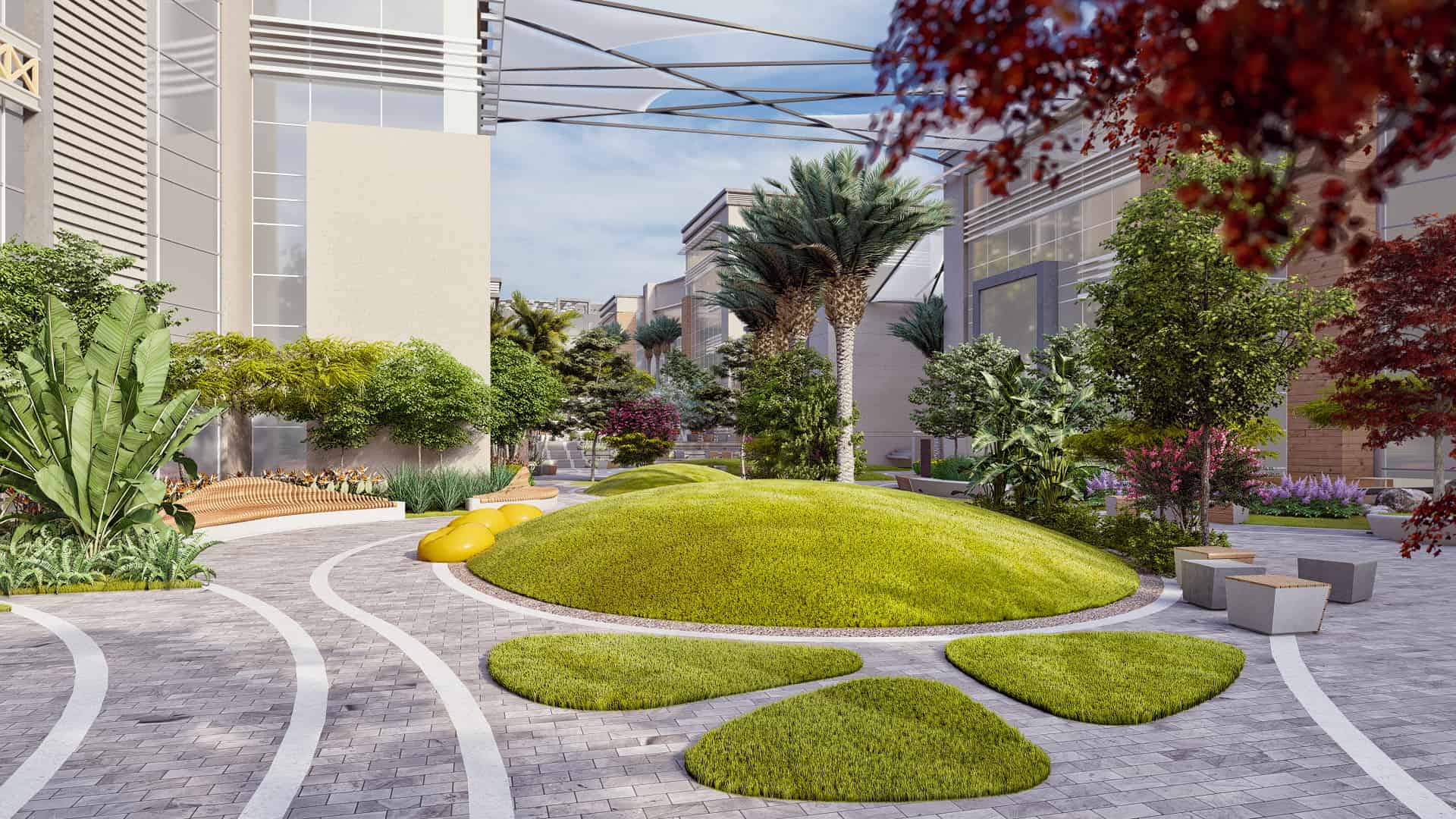
At the lowest point of the site lies The Unity zone, a forested plaza designed for networking, informal exchange, and recreation. The plaza’s dry-deck fountain and variable seating options—benches, bean bags, and grassy slopes—encourage interaction between diverse teams and disciplines. The area culminates in a grand amphitheater carved into a five-meter slope, capable of seating up to 200 attendees for performances, speeches, and large-scale events.
Through its layered spatial narrative and topographic integration, the NTA campus embodies the philosophy of experiential learning and personal transformation. Schaduf’s landscape design not only responds to the physical challenges of the site but also mirrors the Academy’s mission—to guide individuals on a metaphorical and literal journey of growth, unity, and enlightenment, ultimately preparing them to return to society as agents of change. (≈500 words)