
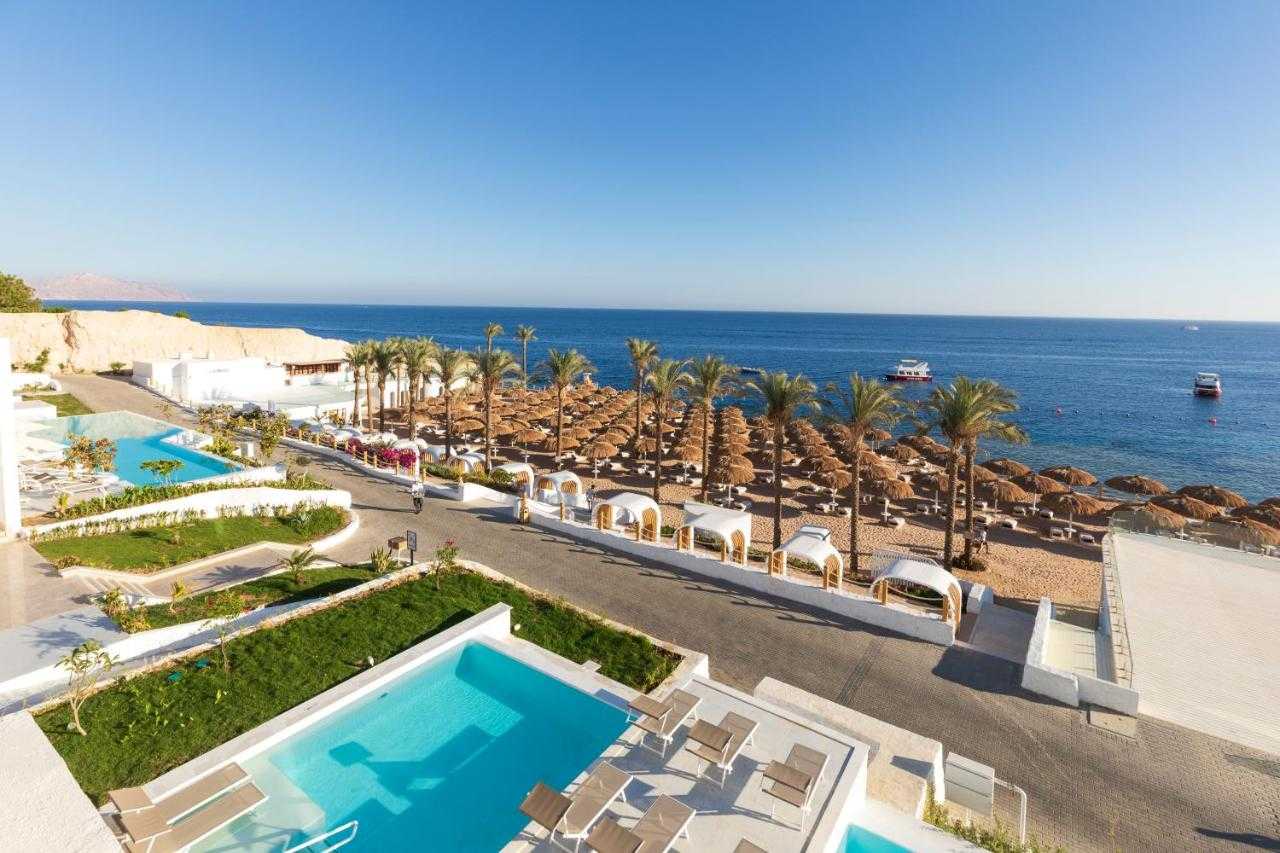
Case Study: WHITE HILLS HOTEL
Client: Madaar Development
Location: Sharm Elsheikh, Egypt
Area: 60 000 m²
Scope: Landscape Architecture, Urban Design
Project Overview
White Hills Hotel presents a 60 000 m² canvas on the Red Sea coast of Sharm Elsheikh, where Madaar Development envisioned an immersive guest environment that marries recreation, relaxation, and ecological stewardship. Schaduf was commissioned to deliver the master landscape vision and urban design—crafting an outdoor realm that unfolds as a sequence of sensory experiences in dialogue with the desert setting.
Challenges
- Arid Climate & Resource Constraints: Designing lush, comfortable outdoor spaces under intense sun and with limited water supply.
- Programmatic Diversity: Accommodating active play areas, contemplative retreats, communal gathering zones, and educational edible gardens within one coherent landscape.
- Stormwater & Soil Health: Managing occasional flash rains and preserving natural groundwater recharge in a predominantly impermeable resort environment.
Solutions
- Meandering Circulation Framework: A network of sinuous pathways—likened to gentle desert streams—guides visitors from the entrance to a central “verdant heart,” anchored by a tranquil water feature that cools the microclimate.
- Zoned Landscape “Rooms”:
- Children’s Play Areas: Natural-material playgrounds that encourage exploration and imaginative interaction with the landscape.
- Quiet Nooks: Secluded garden pockets with native shrub and tree canopies, offering restorative respite.
- Edible Gardens: Seasonally vibrant plantings that serve both as a source of fresh produce and as living classrooms on sustainable cultivation.
- Climate-Adapted Plant Palette: Native and drought-tolerant species layered from groundcovers to canopy trees deliver shade, biodiversity support, and minimal irrigation demand.
- Sustainable Infrastructure: Permeable paving, bioswales, and rain gardens capture stormwater, replenish soils, and mitigate runoff. Building materials—locally sourced stone, timber, and rammed earth—root the design in its context.
- Sensitive Lighting Design: Low-glare, warm-tone fixtures extend usability after dusk while preserving the desert night sky.
Outcomes
- Engaging Guest Experience: Visitors traverse a series of discovery-driven spaces that balance activity, social connection, and quiet contemplation—enhancing overall satisfaction and well-being.
- Environmental Performance: Strategic planting and water-management systems reduce potable water use by an estimated 40 %, while permeable surfaces maintain natural hydrology.
- Community & Educational Value: Edible garden installations foster guest engagement with sustainable food practices, reinforcing the resort’s commitment to ecological stewardship.
Conclusion
At White Hills Hotel, Schaduf’s landscape architecture and urban design have woven together form and function, crafting a desert sanctuary that is as resilient as it is beautiful. By harnessing native ecology, sustainable technologies, and purposeful spatial sequencing, we have created a living landscape that nourishes both the land and the people who experience it—setting a new standard for desert-resort design.