
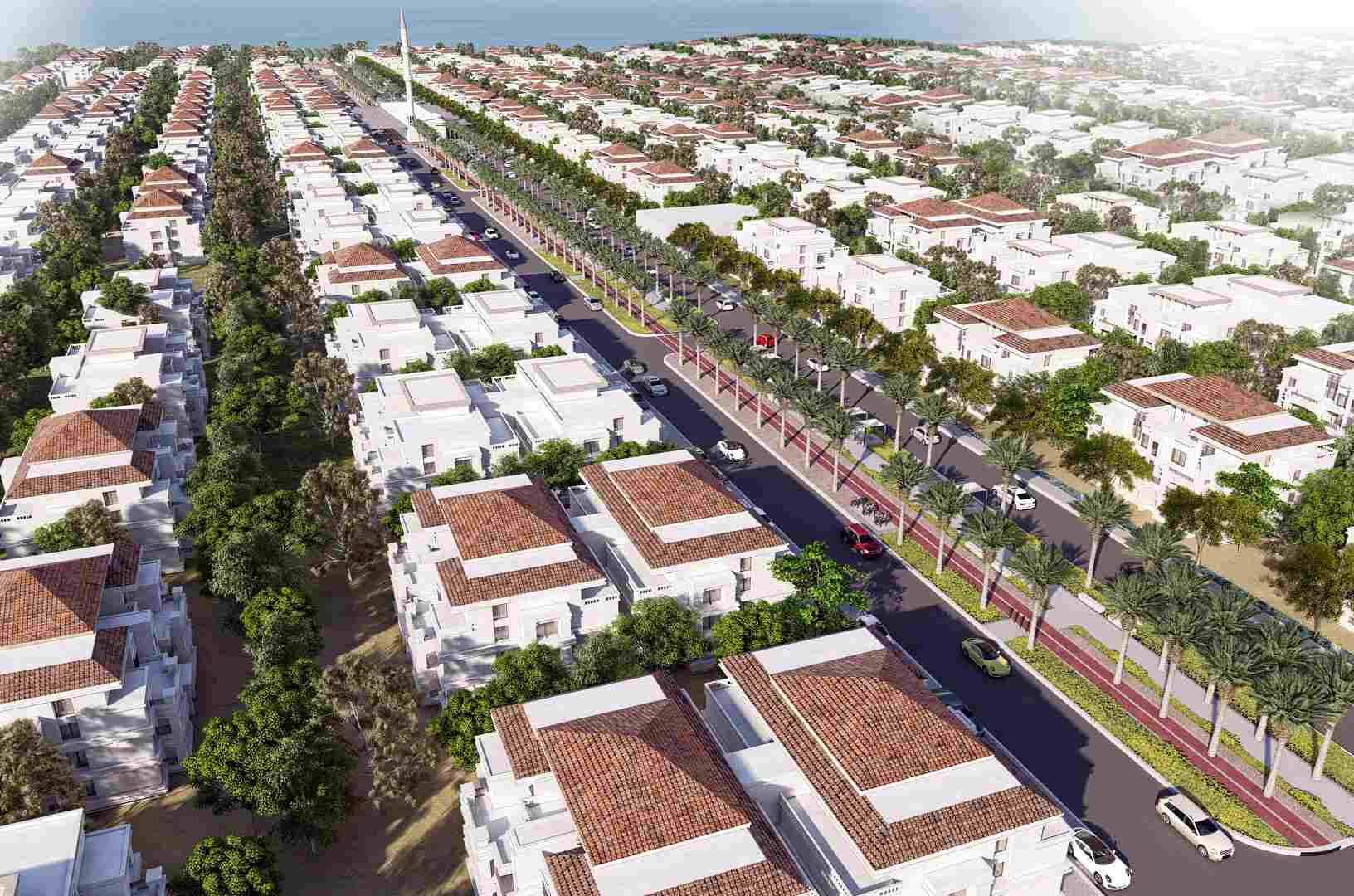
Case Study: RAS EL BAR STREET 51
Client: UN Habitat
Location: Ras El Bar, Egypt
Area: 810 000 m² (830 m corridor)
Scope: Landscape Architecture, Urban Design, Planning
Project Overview
Ras El Bar occupies the unique juncture where the Nile meets the Mediterranean, its population swelling ten-fold—from 25 000 residents to over 250 000 visitors each summer. In partnership with the Governorate of Damietta, UN Habitat commissioned Schaduf to reconceive an 830-metre section of Street 51 as a “complete street”: a multimodal thoroughfare that balances vehicular flow with pedestrian safety, cycling infrastructure, and vibrant public space.
Challenges
- Seasonal Demand: Designing infrastructure capable of accommodating a transient population surge of 200 000 visitors without compromising everyday function.
- Complete Street Objective: Shifting from a car-centric corridor to an inclusive public realm that equally prioritizes pedestrians, cyclists, and motorists.
- Rapid Delivery: Delivering a full design and advisory package—including technical drawings, renders, bill of quantities, and specifications—within a tight three-month timeframe.
Solutions
- Four-Phase Methodology:
- Survey & As-Built Documentation: Comprehensive site survey to create accurate base drawings.
- Detailed Design Development: Translating UN Habitat’s concept into precise landscape, urban design, and planning drawings.
- Design Package Compilation: Assembling 3D visualizations, quantity schedules, material schedules, and construction specifications.
- Construction Advisory: Providing on-call expertise to resolve design queries and ensure fidelity during implementation.
- Complete Street Elements:
-
- Dedicated Bike Lanes: Defined widths and buffer zones to encourage cycling.
- Enhanced Green Infrastructure: Linear parks, bioswales, and street trees to manage stormwater and cool microclimates.
- Public Realm Amenities: Contextual street furniture and lighting designed for durability and user comfort.
- Material Strategy: Selection of locally appropriate, long-lasting materials for pavements, curbs, and fixtures.
Outcomes
- Inclusive Mobility: A safer, more attractive corridor that encourages walking and cycling alongside vehicular access.
- Environmental Resilience: Green corridors and permeable surfaces improve stormwater management and urban comfort.
- Implementation-Ready Documentation: A complete, client-approved design package that accelerates permitting and construction.
- Model for Renewal: Establishes Street 51 as a benchmark for sustainable, people-centered urban upgrades across coastal cities.
Conclusion
Schaduf’s integrated landscape architecture, urban design, and planning transformed Street 51 into a resilient, multi-modal public space—demonstrating our ability to deliver complex, large-scale urban improvements on a rapid timeline while upholding UN Habitat’s vision for equitable, sustainable communities.