
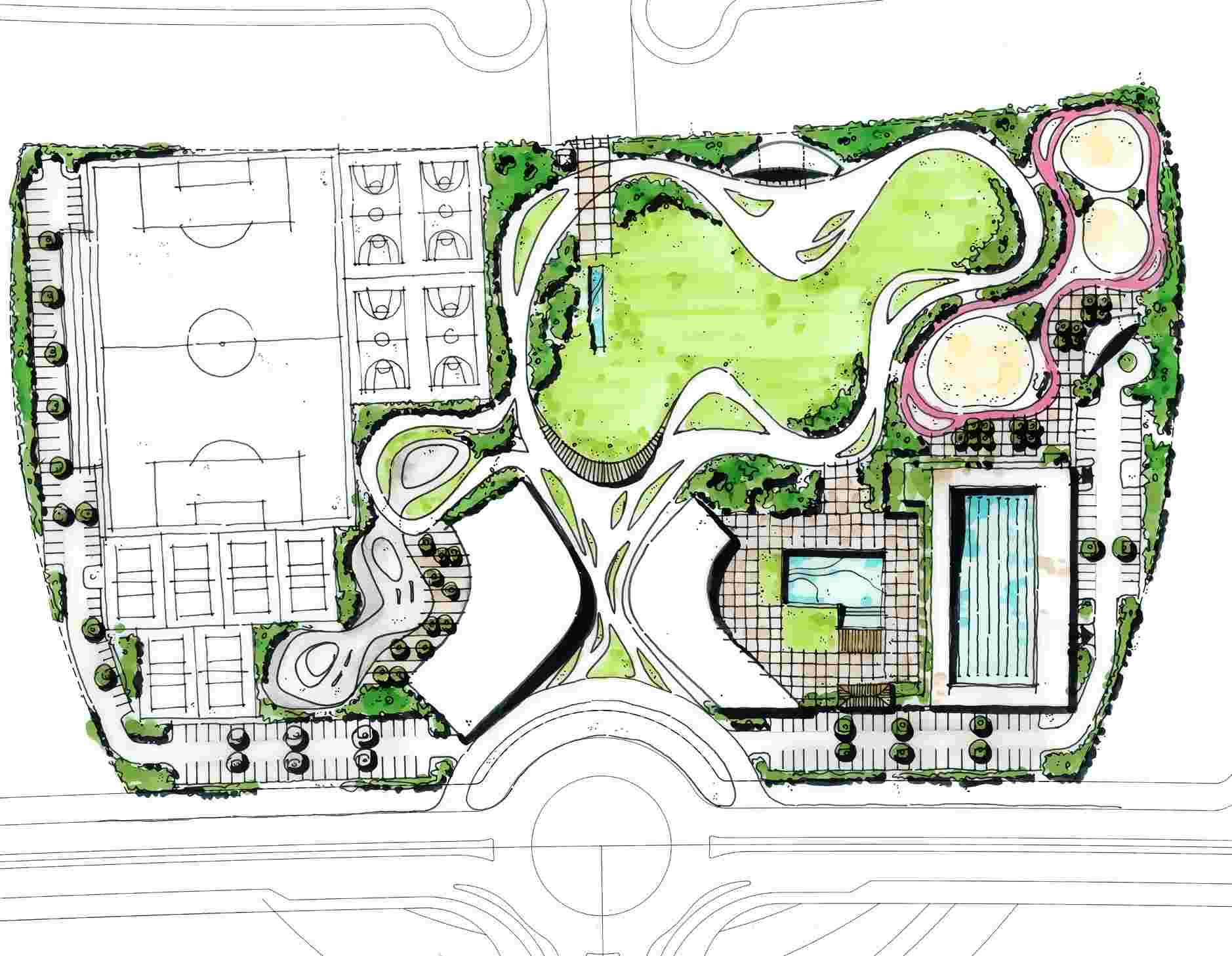
Case Study: BELLE VIE SPORTS CLUB
Client: Emaar Misr
Location: New Zayed City, Egypt
Area: 60 000 m²
Scope: Master Planning, Landscape Architecture & Urban Design
Project Overview
At the core of Emaar Misr’s flagship Belle Vie development lies the Belle Vie Sports Club—a 60 000 m² living landscape designed to unite health, community and design excellence. Schaduf was entrusted to conceive a holistic environment that moves beyond the conventional sports complex: an integrated network of athletic facilities, wellness pavilions, social hubs and green corridors, all woven into Belle Vie’s central “green spine.”
Challenges
- Seamless Indoor–Outdoor Integration: Programming diverse activities—from football and skateboarding to yoga and spa—without fragmenting the visitor experience.
- Functional Aesthetics: Balancing high-performance athletic zones with restorative gardens, ensuring neither feels isolated or purely ornamental.
- Climate-Conscious Phasing: Delivering first-phase amenities under tight schedules, while embedding sustainable practices to reduce water demand and heat gain.
Solutions
- Master Plan “Green Spine”:
- Positioned the club within Belle Vie’s central landscape artery, allowing shaded walkways and garden corridors to flow into athletic and social zones, softening transitions and enhancing wayfinding.
- Layered Activity Rings:
- Outer Ring: Outdoor courts, football pitches, climbing walls and skatepark lie on a service ring road—accessible yet unobtrusive—linked by a one-kilometre jogging loop lined with drought-tolerant hedges.
- Inner Core: The aquatic complex and wellness pavilion nestle within sheltered garden groves. The 50 m Olympic pool and leisure basins maximize sunlight exposure, while wind-buffering plantings maintain comfort.
- Social Heart & Clubhouse:
- A low-slung clubhouse bridges inside and out through expansive glazing and clerestories. Inside, diverse lounges (sports bar, reading nook, e-sports room) cater to varied member needs; outside, tea gardens, food-truck plazas and play areas foster spontaneous interaction.
- Sustainability by Design:
- Native species, smart drip irrigation, permeable paving and hidden service areas beneath planted berms ensure minimal ecological footprint and long-term resilience.
- Phased delivery enabled Phase 1 (outdoor athletics & aquatics) to open quickly, with Phase 2 (social and indoor facilities) following seamlessly.
Outcomes
- Integrated Member Journey: Visitors move effortlessly from high-energy courts to tranquil gardens, experiencing sport, wellness and social life as one cohesive narrative.
- Elevated Well-Being: The club’s layered green network and climate-adapted plantings create microclimates that enhance comfort, recovery and enjoyment.
- Brand Differentiation: Belle Vie Sports Club stands out as a living amenity—a key selling point that elevates the entire Belle Vie precinct.
- Operational Efficiency: Phased implementation and sustainable infrastructure reduce maintenance costs and resource consumption, securing long-term viability.
Conclusion
Schaduf’s master planning, urban design and landscape architecture have transformed the Belle Vie Sports Club into more than a collection of facilities—it is a living framework for wellness and community life. By threading athletic performance, social connection and ecological stewardship into every layer, we delivered a destination that embodies Emaar’s vision of modern, climate-conscious living.