
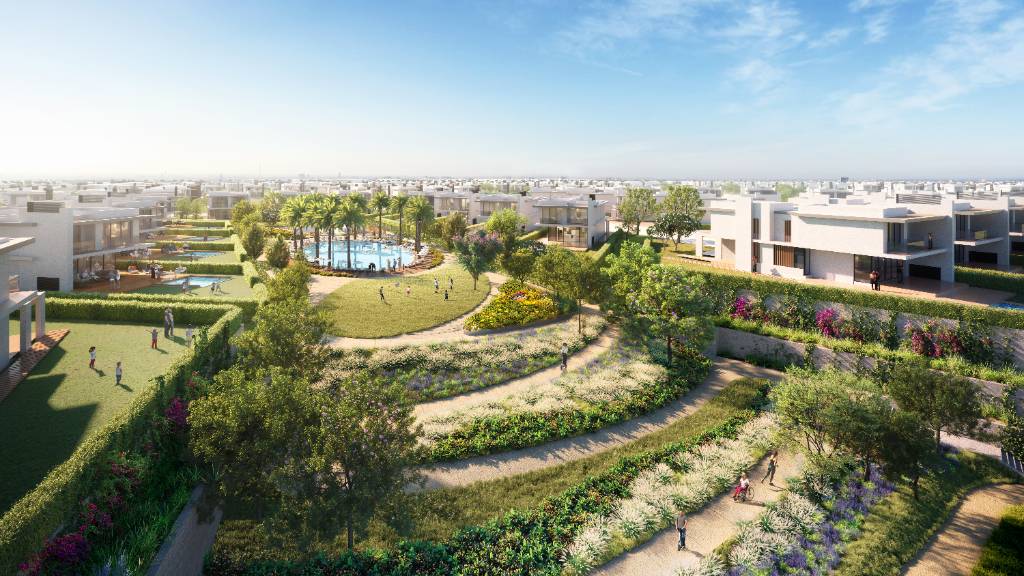
As our cities evolve, so must the landscapes that connect us to nature. The future of landscape design is no longer a matter of aesthetics alone—it’s a question of sustainability, well-being, and intelligent integration of technology. At Schaduf, we believe landscape architecture is not just responding to the future, but shaping it.
This article explores the key pillars redefining our field: sustainability in landscape, the impact of green spaces on mental health, and the growing role of AI and VR in landscape architecture.
Sustainability in Landscape Design
The environmental challenges of our time—climate change, water scarcity, and carbon emissions—demand that landscape architects rethink how outdoor spaces are designed and maintained. Future-forward landscapes must be regenerative, not just decorative.
At the core of sustainable landscaping is green infrastructure: living walls, green roofs, and smart irrigation systems. These elements do more than enhance visual appeal:
- Living walls and green roofs reduce urban heat, lower carbon emissions, and improve air quality. Green roofs, for instance, act as insulators, reducing energy consumption for buildings beneath them.
- Smart irrigation systems use real-time data and sensors to prevent over- or under-watering, minimizing water waste while maintaining optimal plant health.
- Automated landscape maintenance technologies—like sensor-driven trimming systems—reduce energy consumption and ensure precision care without overexerting natural resources.
By adopting these systems, cities can move closer to zero-waste, climate-conscious design. The goal is clear: design landscapes that perform ecologically, not just visually.
The Psychological Power of Green Spaces
The future of landscape design must prioritize human well-being. Numerous studies confirm what we’ve long known intuitively—nature heals.
- Exposure to green spaces has been linked to a 19% reduction in depression, and even greater improvements in stress levels, mood, and overall mental clarity.
- Landscapes encourage physical activity and social interaction, two key contributors to mental health.
- For designers and users alike, green spaces offer a much-needed pause in fast-paced urban life, fostering emotional balance and restoring attention.
In our projects, we design not just for function or form—but for emotional resonance. Every tree, pathway, and water feature is an opportunity to create a space that feels like an escape, even in the heart of the city.
Artificial Intelligence in Landscape Design
AI is revolutionizing landscape architecture. With machine learning and predictive algorithms, designers can make smarter decisions earlier in the process.
AI applications in landscape design include:
- Site analysis: Evaluating soil composition, sun exposure, water flow, and climate data to inform accurate, context-specific design strategies.
- Client profiling: Understanding user preferences in design, color schemes, and spatial experiences to generate personalized concepts.
- Performance optimization: AI can simulate how plant systems will grow and evolve over time, helping designers select the right species and materials for long-term success.
This data-driven approach improves precision, reduces waste, and enhances the design-to-build process, bridging the gap between vision and reality.
Virtual Reality: Designing Through Immersion
Virtual Reality (VR) is transforming client interaction and project visualization. No longer bound by static drawings or 3D renders, landscape architects can now immerse clients in real-time simulations.
- Immersive walkthroughs allow clients to explore their spaces before a single plant is placed.
- Real-time feedback improves collaboration, enabling quick adjustments and stronger alignment between client vision and design output.
- For designers, VR is a tool to test spatial arrangements, visual impact, and sensory flow—before breaking ground.
VR ensures designs are not only beautiful on paper, but meaningful and functional in experience.
Conclusion: Designing the Future Today
Landscape design is no longer a luxury—it’s a necessity. As we face environmental and social challenges, our role as landscape architects is to create spaces that nourish both planet and people.
Sustainable practices reduce our footprint. Green spaces support mental health. AI and VR enhance the design process and deepen client engagement. Together, these elements are shaping the future of landscape design—a future that is smarter, greener, and more human.
At Schaduf, we are proud to be at the forefront of this movement. If you’re planning your next project and want a partner who understands how to design with tomorrow in mind, we’re here to help.
Ready to shape the future with us?
Get in touch with our team and let’s build sustainable, intelligent landscapes—together.